Baranjski Kulen
Kulen
Baranja, Croatia
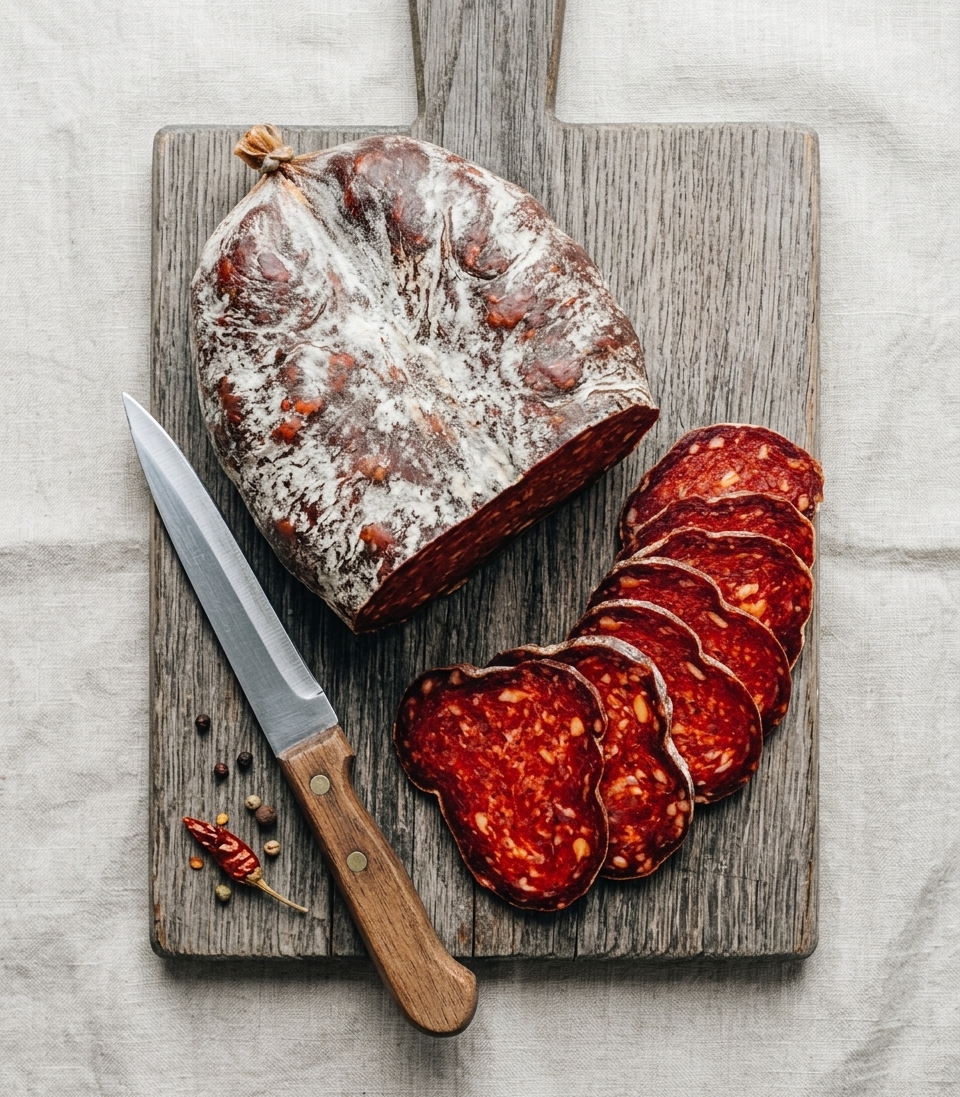
Baranjski Kulen is a premium dry-cured pork sausage from the Baranja region of Croatia, made from the best cuts only: leg and loin, seasoned hard with hot paprika and garlic, then cold-smoked and aged for months. Thicker and coarser than ordinary kobasica, stuffed into a pig's appendix or bladder casing, giving it its round, flattened shape. Kulen is Croatia's most prized charcuterie, with EU PGI protection.
History
Kulen-making is an ancient tradition in Baranja and Slavonia, deeply tied to kolinje, the communal autumn pig slaughter that has been the social and culinary heart of these regions for centuries. Every family has its own recipe, guarded like a secret. The quality of the kulen depends on the quality of the pork (traditionally from Mangalica or Black Slavonian pigs), the paprika (which must be locally grown and sun-dried), and the patience of the aging process. A good kulen needs at least 6-9 months. In 2015, Baranjski Kulen received EU PGI (Protected Geographical Indication) status, cementing its place as one of Europe's great cured meats.
Ingredients
Preparation
Only the best cuts of pork (leg and loin) are used, no offal, no fillers. The meat is coarsely minced by hand or through a large-hole grinder, then mixed generously with hot and sweet paprika and crushed garlic. The mixture is stuffed tightly into a pig's appendix or bladder, pressed flat, and tied. It is then cold-smoked over beechwood or fruit wood for several weeks, and finally hung to dry-age in a well-ventilated space for 6-9 months. The result is a firm, deep-red sausage with a white mold bloom on the outside.
Taste
Very spicy from the hot paprika, with deep smoky undertones and a strong garlic punch. The pork flavor is concentrated from months of aging. Nothing subtle about it.
Texture
Firm and dense, with a coarse, rustic grain. The meat is visible in distinct pieces, not fine-ground. When sliced, the interior is deep brick-red with visible fat marbling. Chewy, you have to work each bite.
Pairings
Rituals & Traditions
Kolinje, the pig slaughter
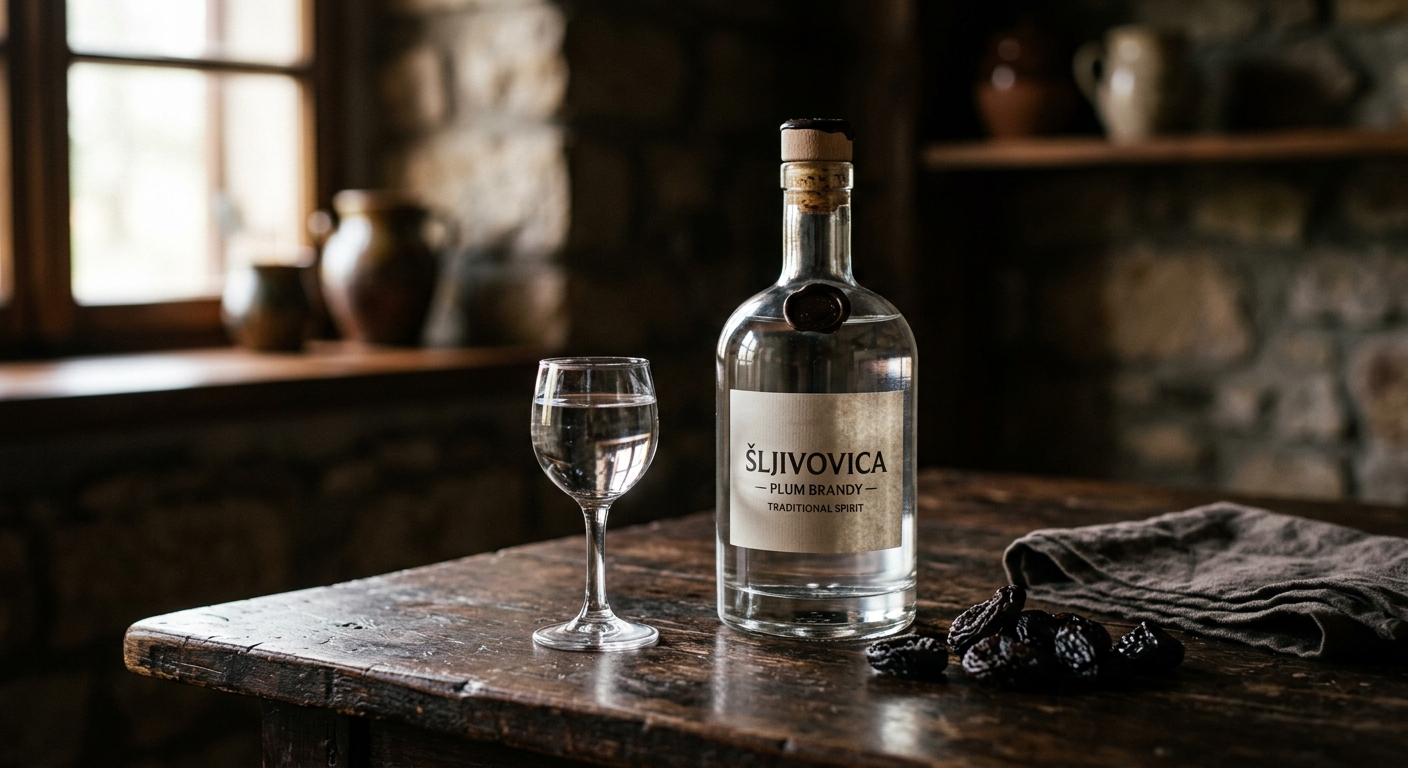
Kulen-making begins at kolinje, the communal winter pig slaughter. The entire family gathers, and the best meat is reserved for kulen. It is a social event as much as a culinary one, with rakija flowing and čobanac simmering.
Slice it thick, eat it slow
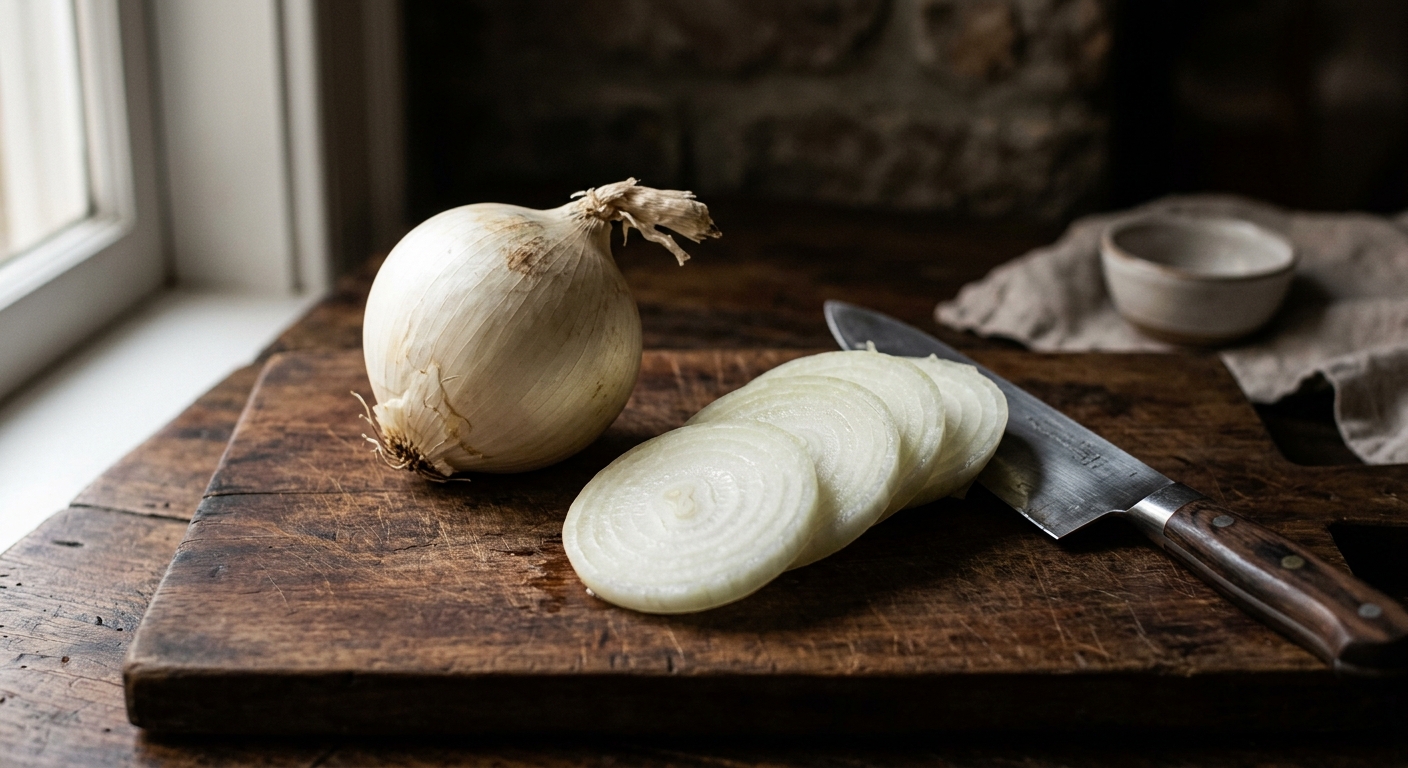
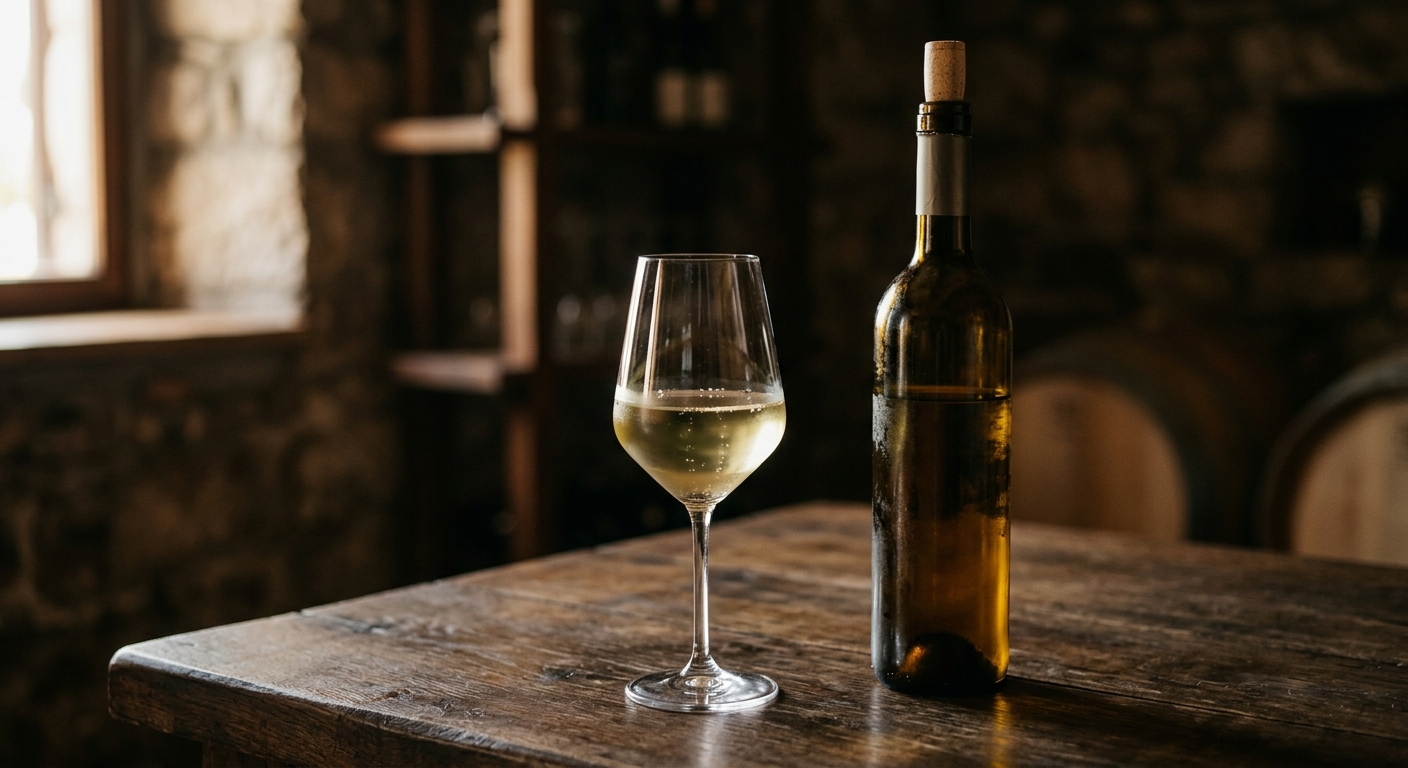
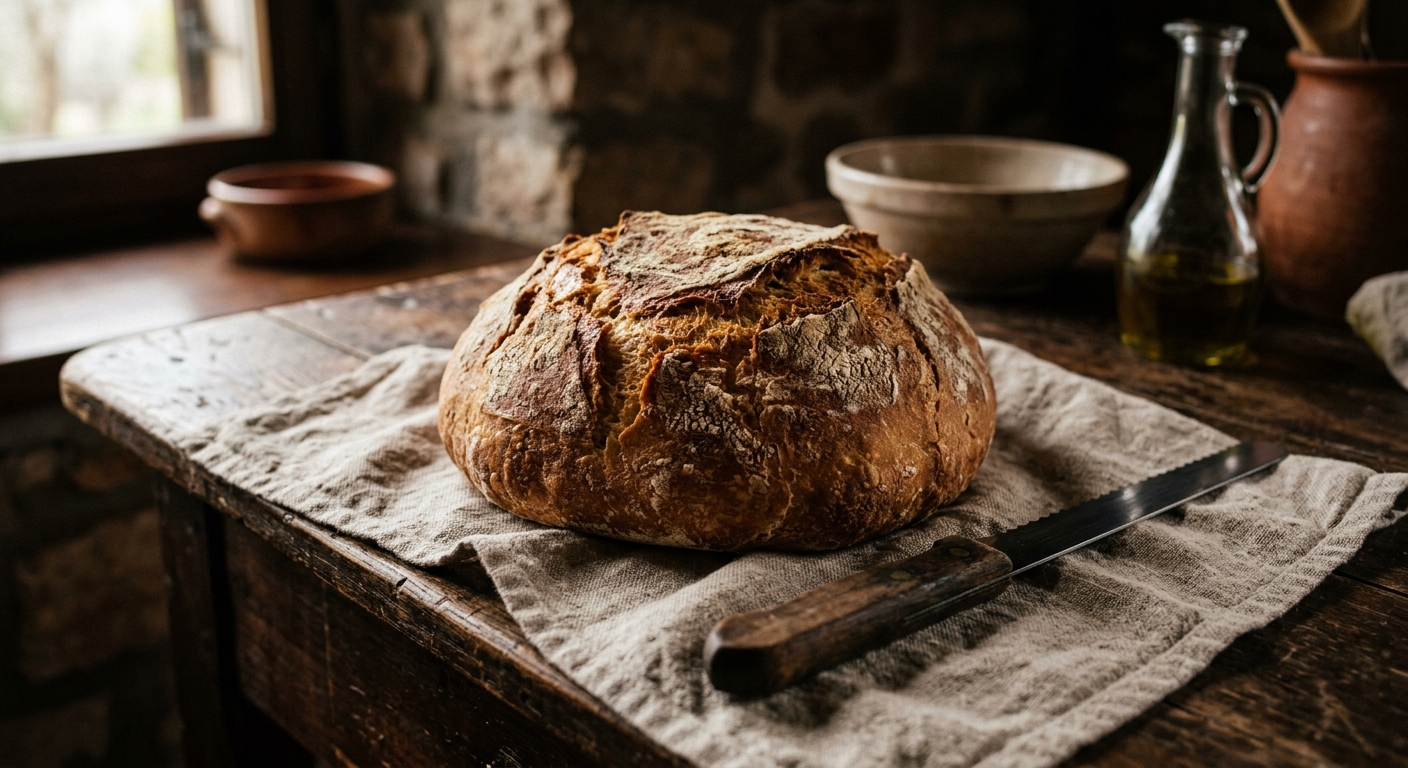
Kulen is always sliced by hand into thick rounds (at least 5mm). It is meant to be savored slowly, one slice at a time with bread, onion, and a sip of wine between bites.
The competition circuit
Kulen-making competitions (kulenijada) are held across Baranja and Slavonia every year. Families compete fiercely for the title of best kulen. Winning is a matter of enormous local pride.
Recipes
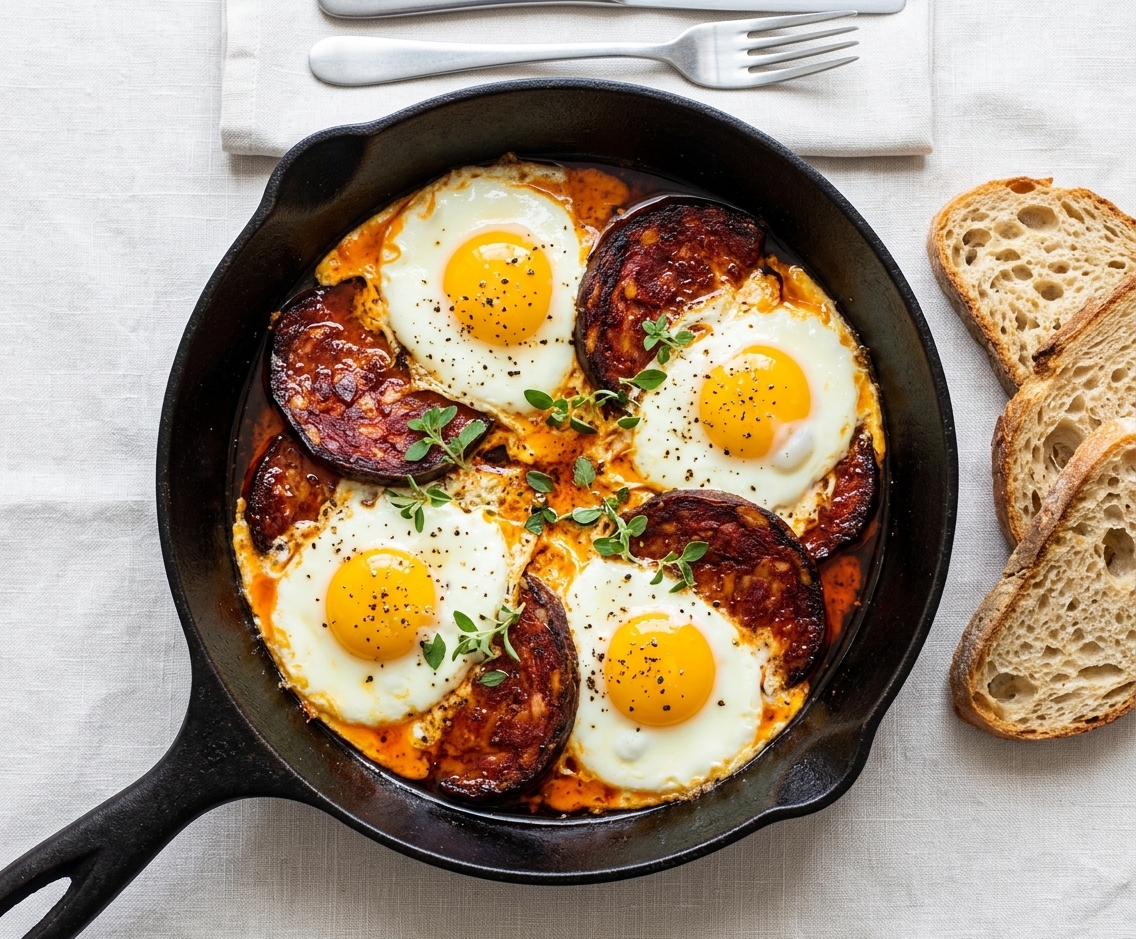
Kulen with Eggs (Kulen s jajima)
Baranjski Kulen
A hearty Croatian breakfast or quick supper: thick slices of kulen fried in a pan until the paprika oils release, then eggs cracked on top. The spicy fat bastes the eggs, creating a fiery one-pan meal.
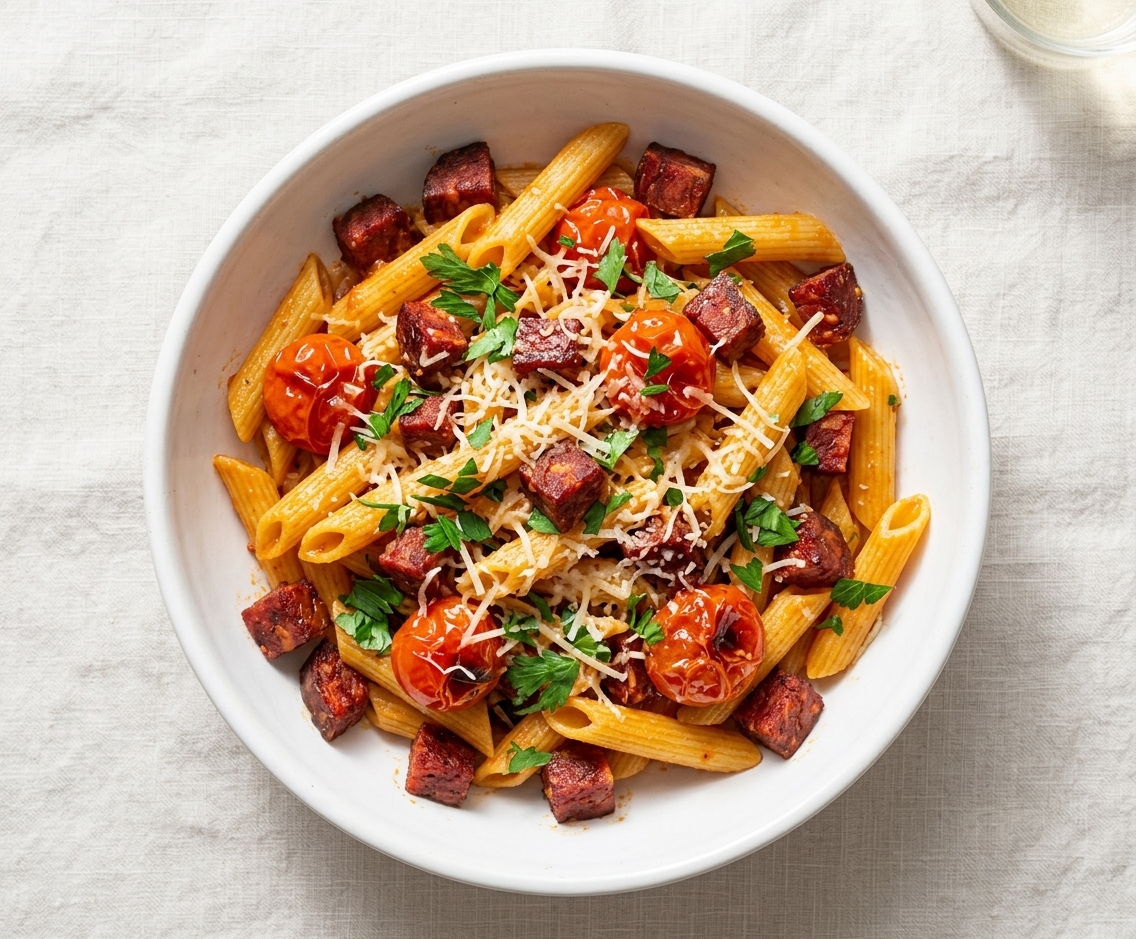
Pasta with Kulen (Tjestenina s kulenom)
Baranjski Kulen
A modern Croatian twist: diced kulen rendered in olive oil with garlic, tossed through pasta with cherry tomatoes. The kulen melts into a spicy, smoky sauce that coats every strand. Think of it as Croatia's answer to amatriciana.
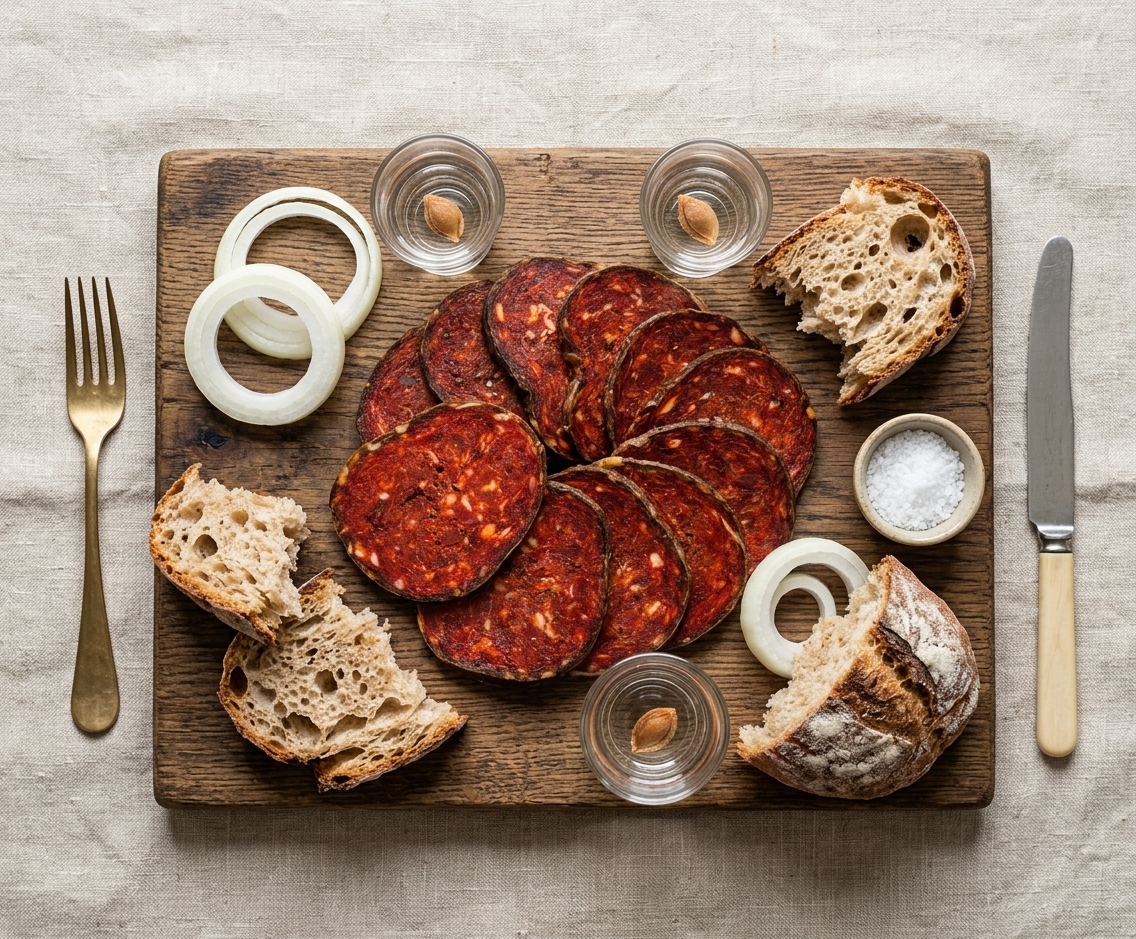
Baranjski Kulen Platter
Baranjski Kulen
The authentic way to serve kulen: thick hand-cut slices on a wooden board with fresh white onion, homemade bread, and a shot of šljivovica. No cooking, no fuss, just the best of Baranja on a plate.
On the Map
Where to Buy
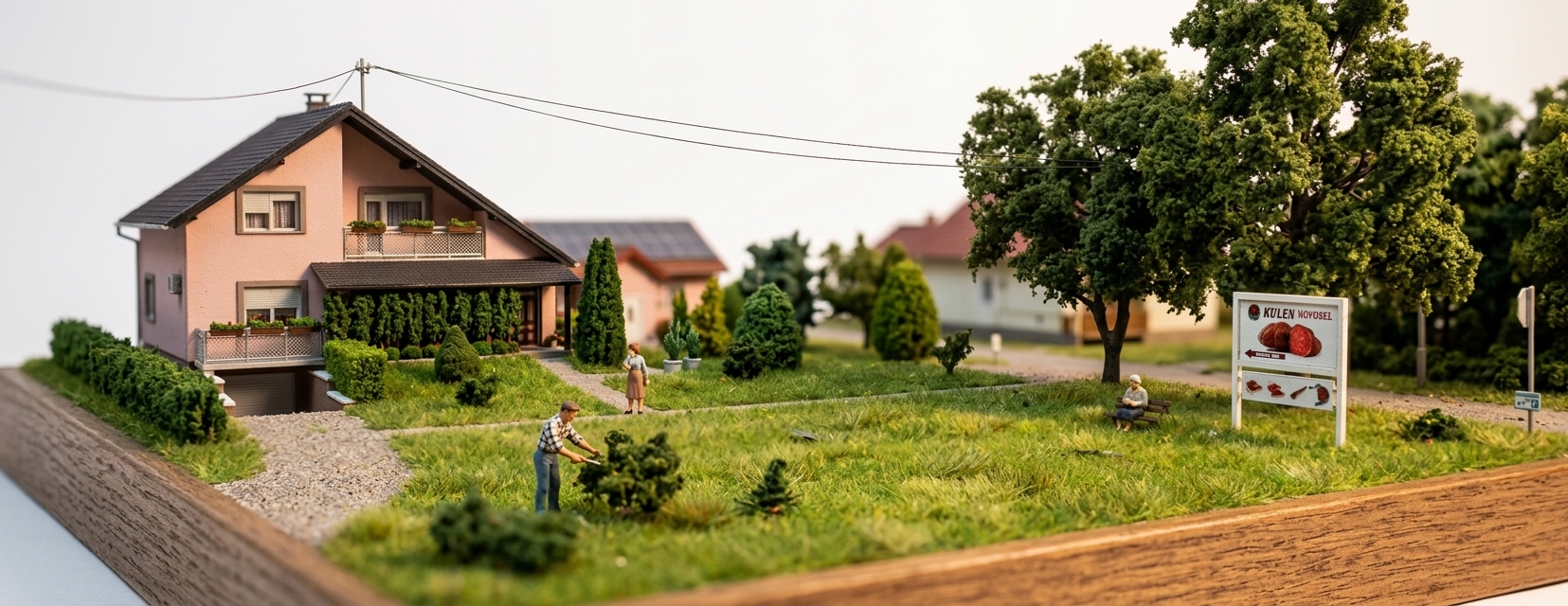
Kulen Novosel
Gat, Croatia
Family operation run by the Novosel family in the village of Gat near Valpovo. They raise their own pigs and make kulen from scratch using traditional methods. Over 200 competition awards speak for themselves. Their kulen is available direct from the farm or through local distributors across Slavonia.
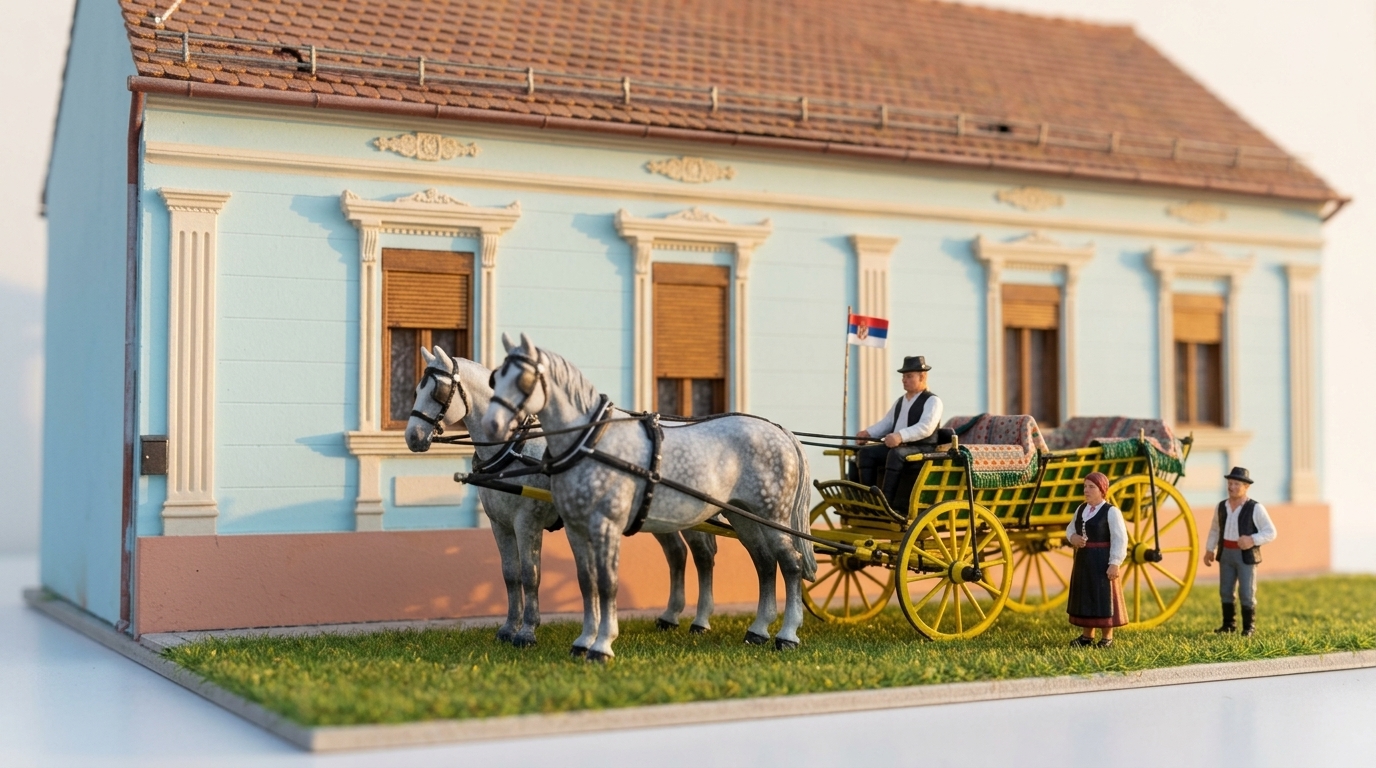
Slavonian Farm Families
Jagodnjak, Croatia
The real kulen comes from family farms across Slavonia and Baranja. Every household has its own recipe, passed through generations. At kolinje (the winter pig slaughter), families make kulen from their best pork, season it with homegrown paprika, and hang it in smokehouses for months. The best way to buy kulen is to know someone in a village. Second best: visit the Kulenijada festival in Jagodnjak each June, where dozens of families compete and sell.
Where to Eat
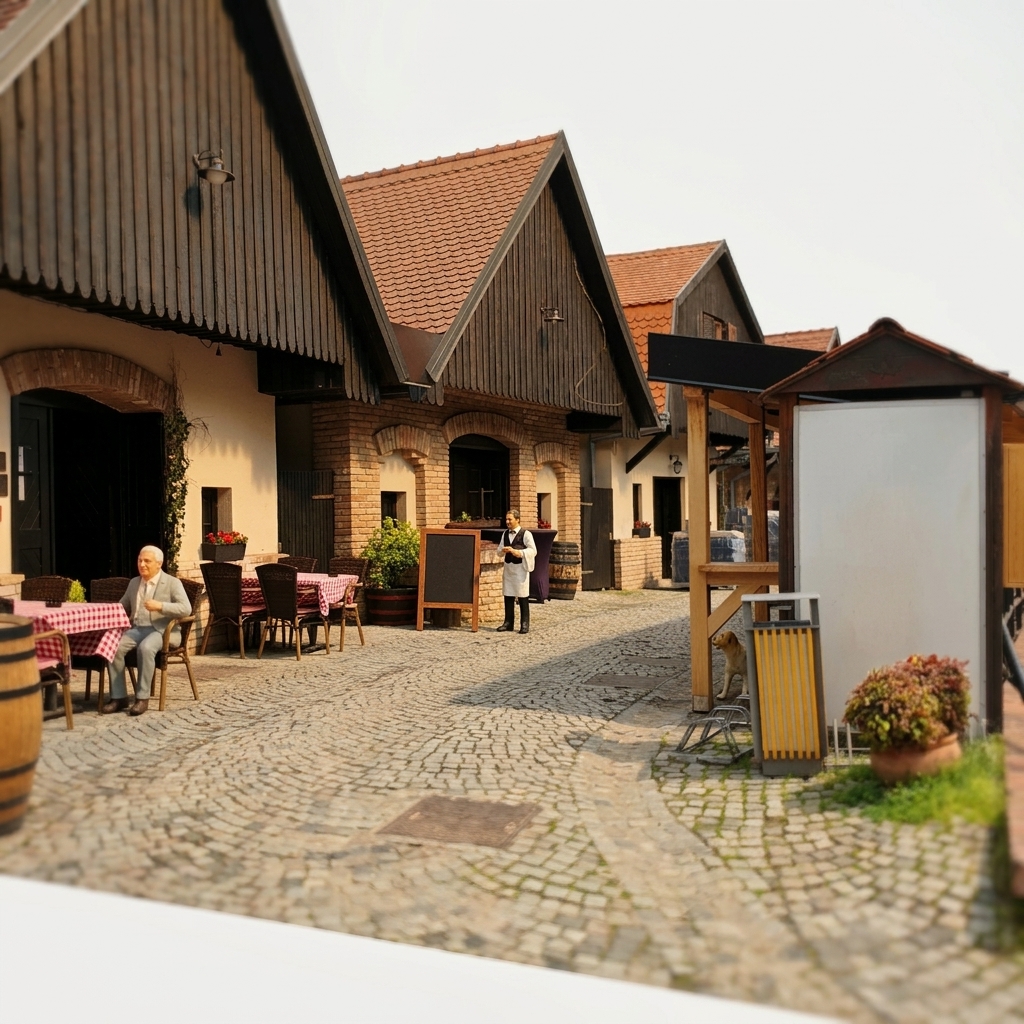
Vinarija Josić
Zmajevac, Croatia
Winery and restaurant in the wine village of Zmajevac, on the slopes of Bansko brdo. The Josic family grows Grasevina and other local varieties and runs one of the best restaurants in Baranja. Their Baranjske Strati platter is the star: a wooden board loaded with kulen, homemade sausages, ham, cheese, and ajvar. Eat it in the wine cellar if you can. Gault&Millau listed.
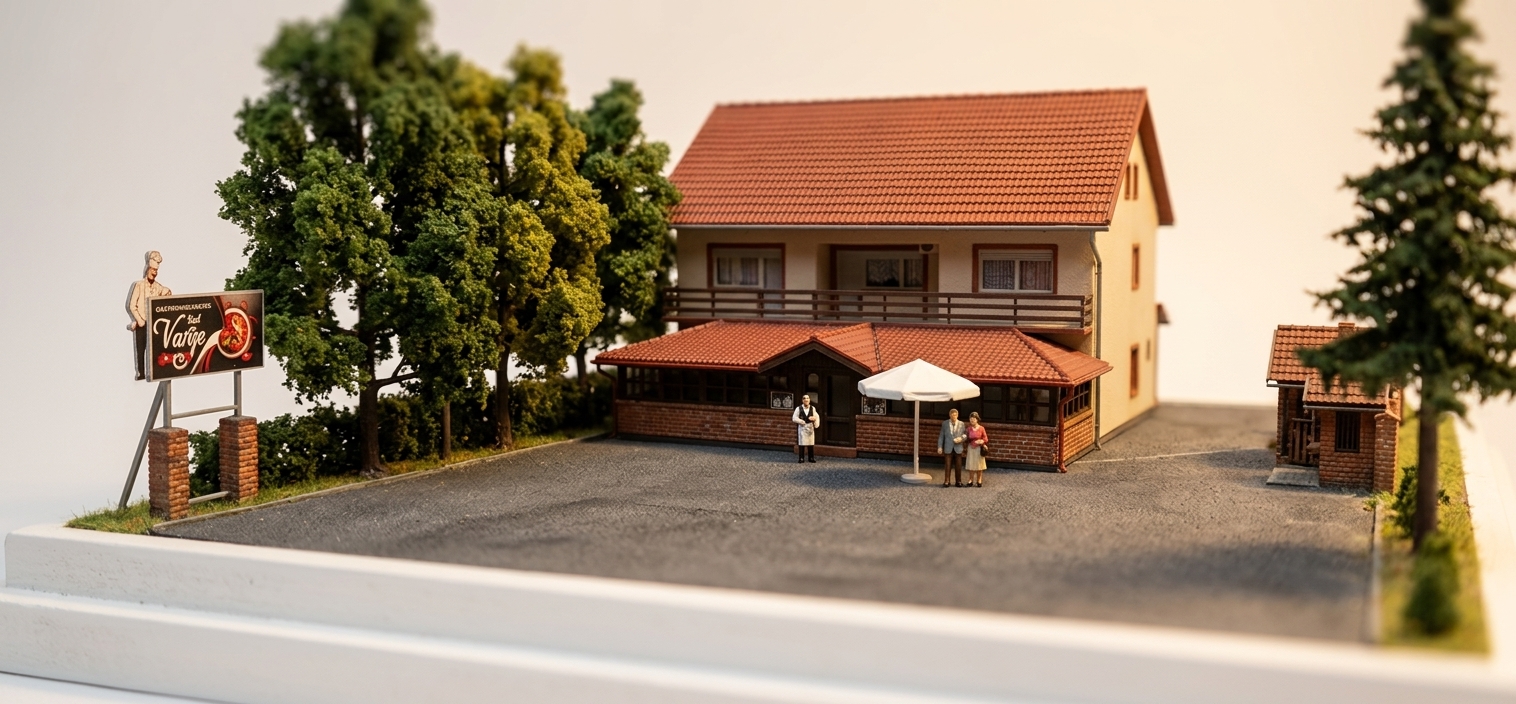
Kod Varge
Bilje, Croatia
The oldest restaurant in Baranja, run by the same family since the late 1960s. A few kilometers from Osijek in the village of Bilje. They make their own kulen, ham, sausages, and cracklings. The cold starter platter with homemade kulen is mandatory. Follow it with fis paprikas or cobanac. No frills, just honest Baranja cooking.