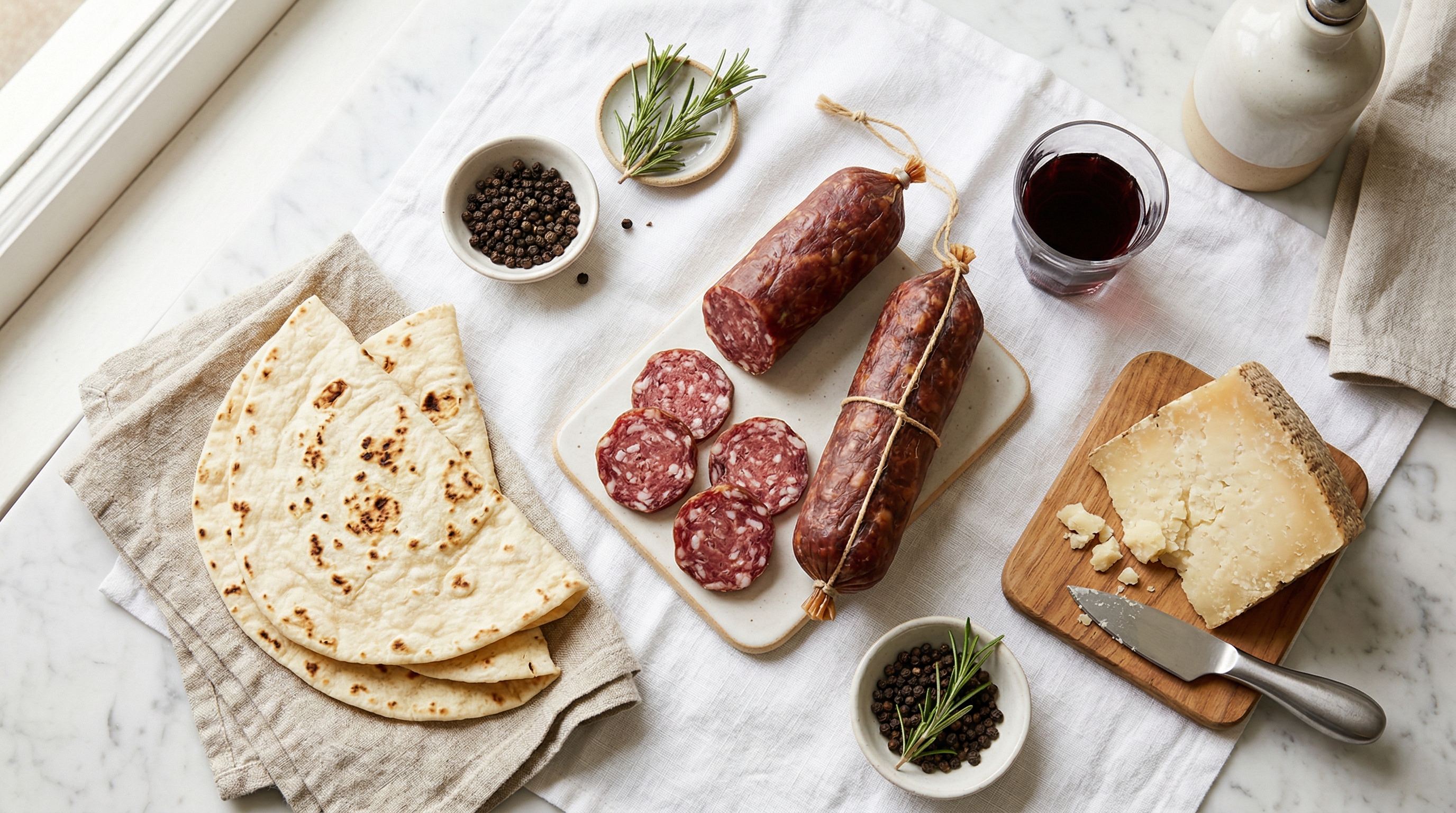
Salamini alla Cacciatora
Cacciatorini
Emilia-Romagna, Italy
Small, hard salami historically carried by hunters in their game bags. Each piece weighs between 50 and 350 grams, making them portable by design. They are made across northern and central Italy but hold DOP protection as a collective product. The curing process is the same as larger salami, but the small diameter means the meat dries faster and the salt and spice penetrate deeper relative to the size.
History
Cacciatorini are mentioned in accounts of Italian rural life from at least the 16th century. The small size was practical: hunters could carry a day's food without refrigeration, and a single salami could be eaten whole without the need to slice and rewrap. The name 'alla cacciatora', meaning 'hunter's style', appears across Italian cuisine to denote quick, rustic cooking. The DOP designation for Salamini alla Cacciatora was granted in 2001, covering production across northern and central Italy.
Ingredients
Preparation
The pork is ground to a medium-fine texture and mixed with salt, peppercorns, garlic, and wine. The mixture is stuffed into a small natural casing and tied into individual links of 10 to 15 centimeters. After an initial drying period, they hang to cure for at least ten days. The rapid drying creates a firm, compact texture throughout.
Taste
Concentrated pork flavor with pepper and a mild garlic note. More assertive than larger Italian salamis due to the salt concentration in a small piece. The short ageing keeps the flavor clean rather than funky.
Texture
Dense and firm, with an even grain throughout. Slices cleanly without crumbling. The small size means the fat-to-lean ratio is consistent from edge to center.
Rituals & Traditions
Hunter's field lunch
Cacciatorini were designed to travel. Hunters ate them whole, broken off without slicing, with bread carried in the same bag. Some rural families still give them as gifts at Christmas for this reason.
On the Map
Where to Buy
+ Know a producer? Suggest oneWhere to Eat
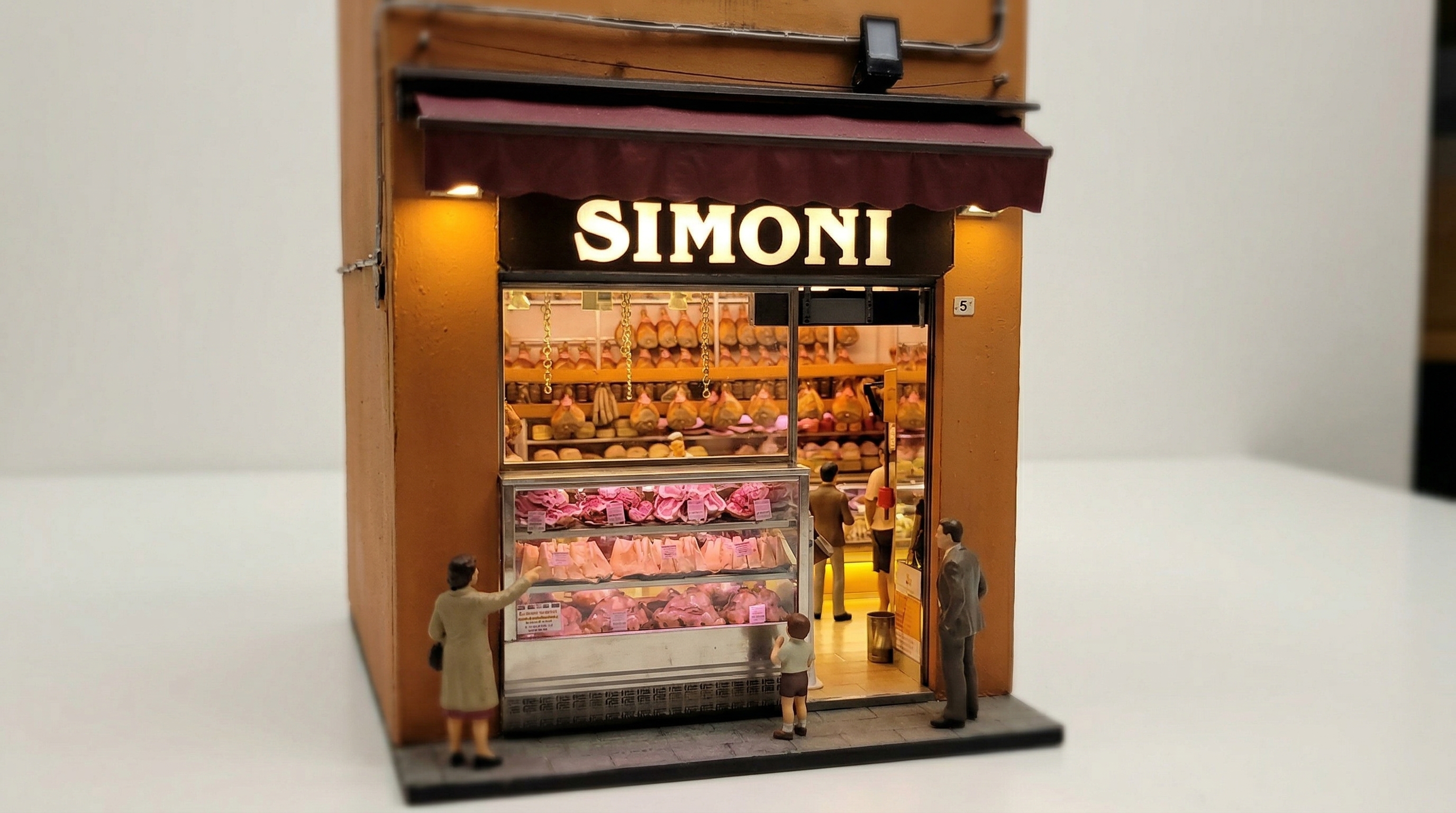
Salumeria Simoni
Bologna, Italy
Salumeria Simoni has occupied its corner of Via Drapperie since 1951. Cured meats hang from the ceiling in dense rows, and the smell reaches you before the shop does. This is the Quadrilatero at its most photogenic — but the locals who come here aren't after atmosphere. They want mortadella sliced thin, a piece of good salame, and a quick conversation with whoever is behind the counter. The shop stocks regional producers from across Emilia-Romagna.
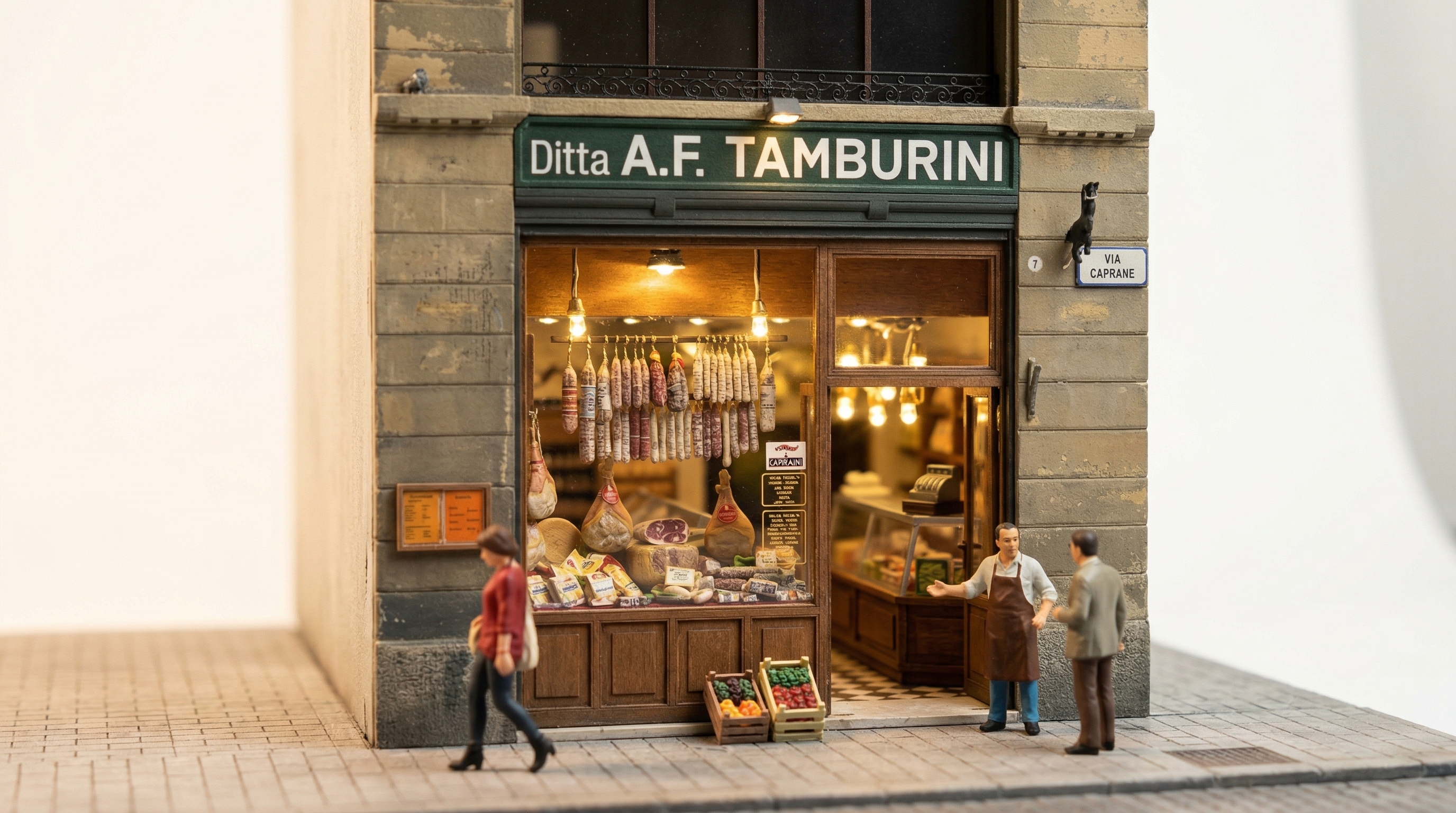
Tamburini
Bologna, Italy
Tamburini opened on Via Caprarie in 1932 and has anchored Bologna's Quadrilatero ever since. Mortadella hangs in the window, cotechino rests in the cold case, and the counter staff move with the efficiency of people who have sliced a lot of meat. The shop is also a tavola calda — warm dishes at lunch, eaten standing at narrow counters along the walls. No other salumeria in Bologna draws the same mix of locals, market vendors, and visitors who have done their homework.