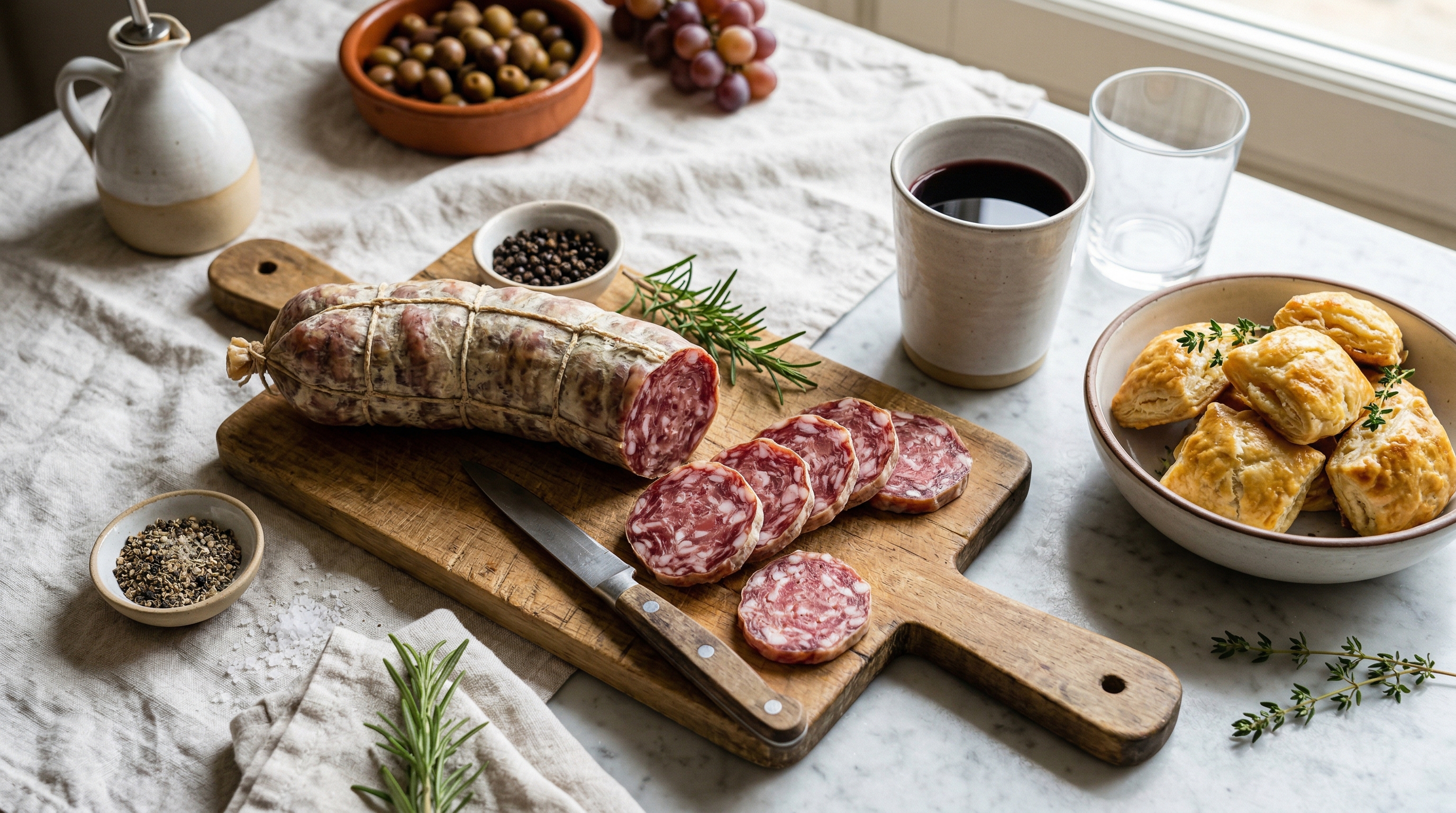
Salame Piacentino
Emilia-Romagna, Italy
A DOP salami from the Piacenza hills on the Po river's western edge. Made from pork shoulder and loin, seasoned with salt, whole peppercorns, and wine, then stuffed into a pork bladder or large casing and cured for a minimum of 45 days. The ageing environment of the Piacenza valleys, with their particular air currents from the Apennines, is considered essential to the product's character.
History
Piacenza is Italy's westernmost Emilian city, and its salumi tradition is distinct from Parma's, using different proportions and a longer minimum ageing time. Documents from the Farnese court in the 16th century mention Piacenza salami as a product worthy of gifts to nobles. The DOP designation was granted in 1996, covering a production zone defined by the Piacenza province and its Apennine foothills.
Ingredients
Preparation
Pork shoulder and loin are ground coarsely and mixed with salt, peppercorns, red wine, garlic, and spices. The mixture is stuffed into a large natural casing, traditionally a pig's bladder, which gives the sausage its characteristic rounded shape. It hangs for a short drying phase before curing for at least 45 days in the Piacenza valleys.
Taste
Fuller-bodied than Felino, with more pronounced red wine and spice notes from the longer ageing. The fat and lean are distinct in flavor; the cured pork is sweet and the fat slightly nutty. Less mild than other Emilian salamis.
Texture
Compact and firm, with a coarse grind that keeps the lean and fat pieces visible and distinct. Slices hold their shape without crumbling.
Rituals & Traditions
The tre salumi di Piacenza
Piacenza is proud of its three DOP salumi: salame, coppa, and pancetta. Any local antipasto plate in the city serves all three together; presenting just one is considered incomplete.
On the Map
Where to Buy
+ Know a producer? Suggest oneWhere to Eat
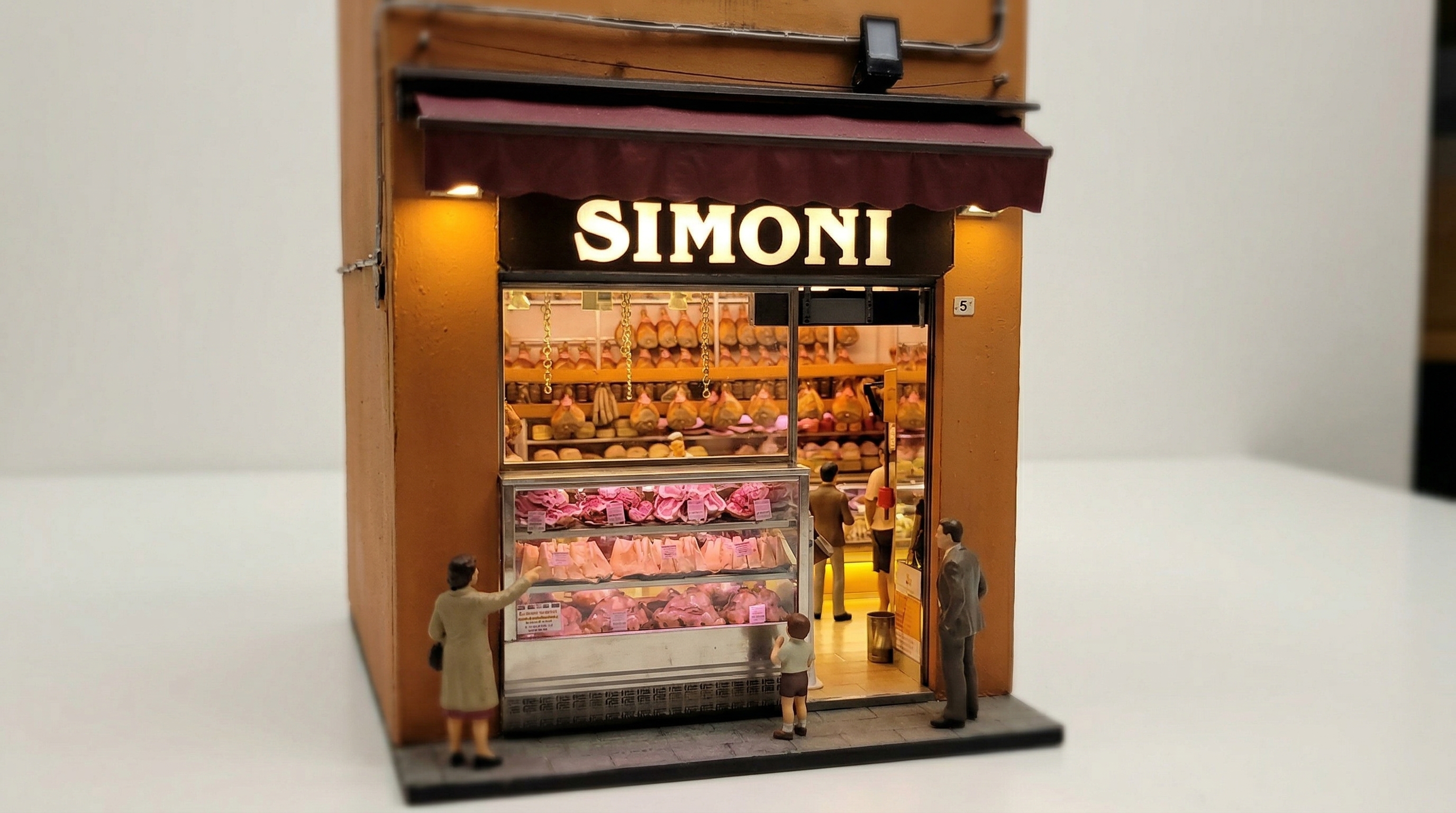
Salumeria Simoni
Bologna, Italy
Salumeria Simoni has occupied its corner of Via Drapperie since 1951. Cured meats hang from the ceiling in dense rows, and the smell reaches you before the shop does. This is the Quadrilatero at its most photogenic — but the locals who come here aren't after atmosphere. They want mortadella sliced thin, a piece of good salame, and a quick conversation with whoever is behind the counter. The shop stocks regional producers from across Emilia-Romagna.
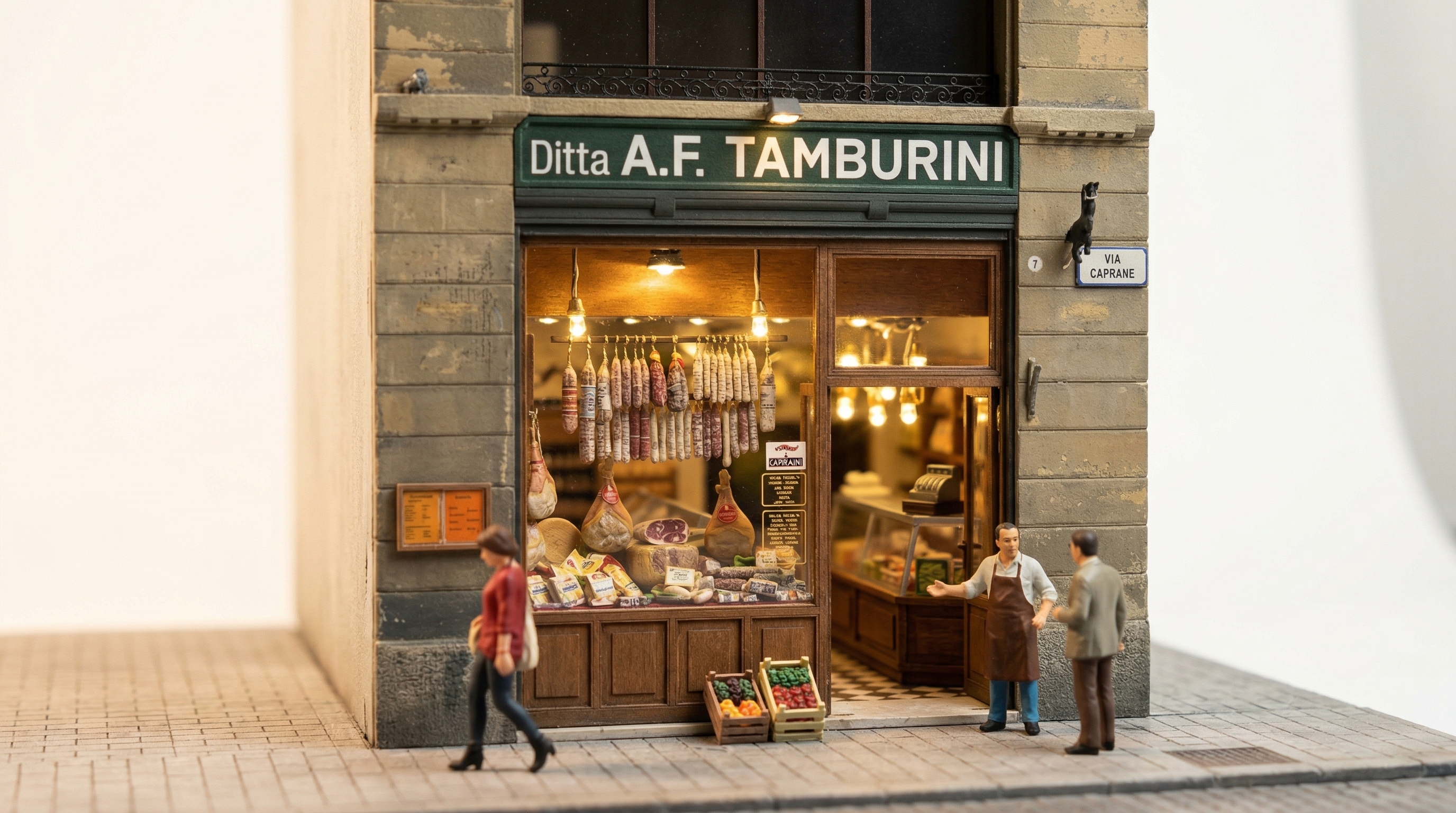
Tamburini
Bologna, Italy
Tamburini opened on Via Caprarie in 1932 and has anchored Bologna's Quadrilatero ever since. Mortadella hangs in the window, cotechino rests in the cold case, and the counter staff move with the efficiency of people who have sliced a lot of meat. The shop is also a tavola calda — warm dishes at lunch, eaten standing at narrow counters along the walls. No other salumeria in Bologna draws the same mix of locals, market vendors, and visitors who have done their homework.