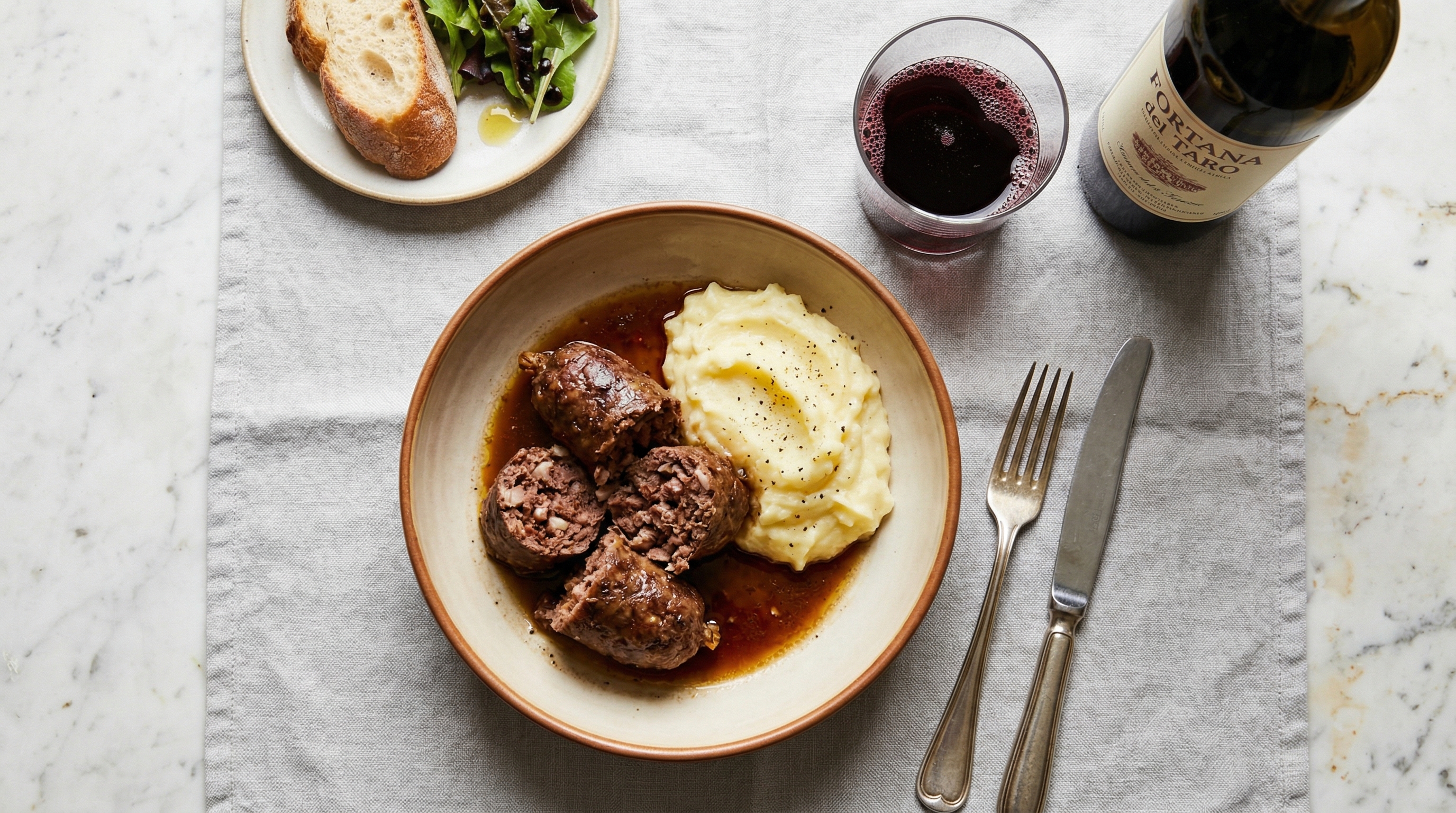
Salama da Sugo
Salama da Sugo Ferrarese
Emilia-Romagna, Italy
A cured and cooked sausage from Ferrara, made from a blend of pork cuts including tongue and liver, seasoned with red wine and spices, then aged in a pig's bladder. After months of curing, it simmers slowly in water and is served in a hollow of mashed potato or polenta, the cooking juices spooned over the top. It holds IGP status.
History
Salama da sugo appears in Ferrarese records from the Renaissance, mentioned in accounts of the Este court banquets. The name translates loosely as 'sausage with sauce', referring to the cooking juices that pool in the serving hollow. Ferrara's Po Delta climate, with its cold winters and humid air, proved ideal for the long ageing the sausage requires. It became a symbol of local identity and today remains one of Italy's most singular cured meats.
Ingredients
Preparation
Pork cuts are coarsely ground and mixed with salt, wine, and spices, then stuffed into a pig's bladder. The sausage hangs to cure for six months to a year, during which it develops a dark, wrinkled exterior. To cook, it simmers submerged in water for five to six hours. The casing is cut open at the table and the filling served with its own juices.
Taste
Deep, complex pork with wine-forward fermented notes and a warm spice background. The liver and tongue add mineral depth. Cooking juices concentrate into a rich sauce that is integral to the dish.
Texture
Coarsely ground and dense, with visible pieces of pork and offal. Soft after the long cook, but with more body than cotechino. The juices that pool in the serving mound keep it moist.
Rituals & Traditions
A year's patience
Producers traditionally hang the sausage at the autumn slaughter and do not eat it until the following autumn or winter. The waiting is considered part of the ritual.
Serve in a mashed potato hollow
Plate a mound of mashed potato, hollow the center, place the opened sausage inside, and spoon the cooking juices over everything.
On the Map
Where to Buy
+ Know a producer? Suggest oneWhere to Eat
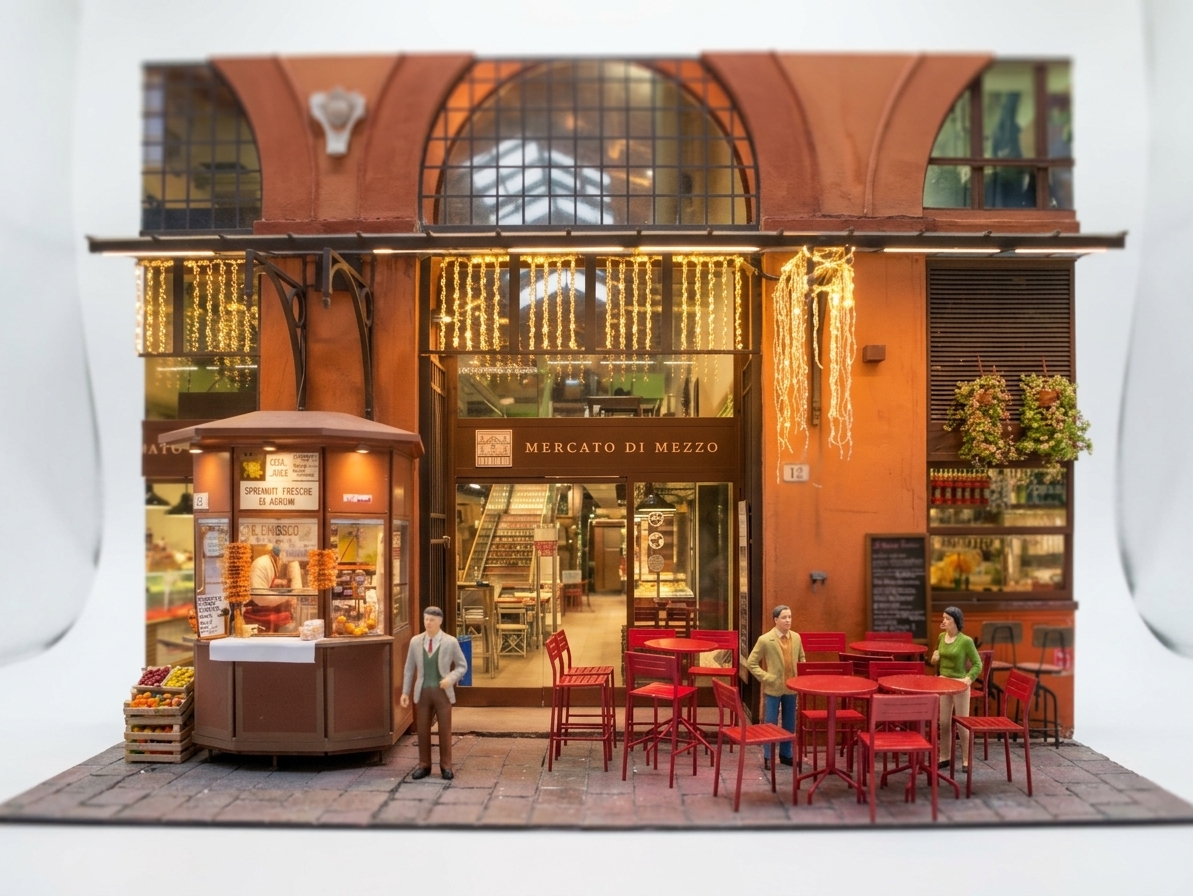
Mercato di Mezzo
Bologna, Italy
Mercato di Mezzo sits at the centre of the Quadrilatero, the medieval market grid that still functions as Bologna's food heart. The covered hall brings together vendors selling mortadella by the slice, cotechino in winter, fresh pasta, and local cheeses. A mezzanine bar overlooks the ground floor stalls. The mercato runs from morning until late evening, and the crowd shifts from market shoppers to aperitivo drinkers as the day goes on.
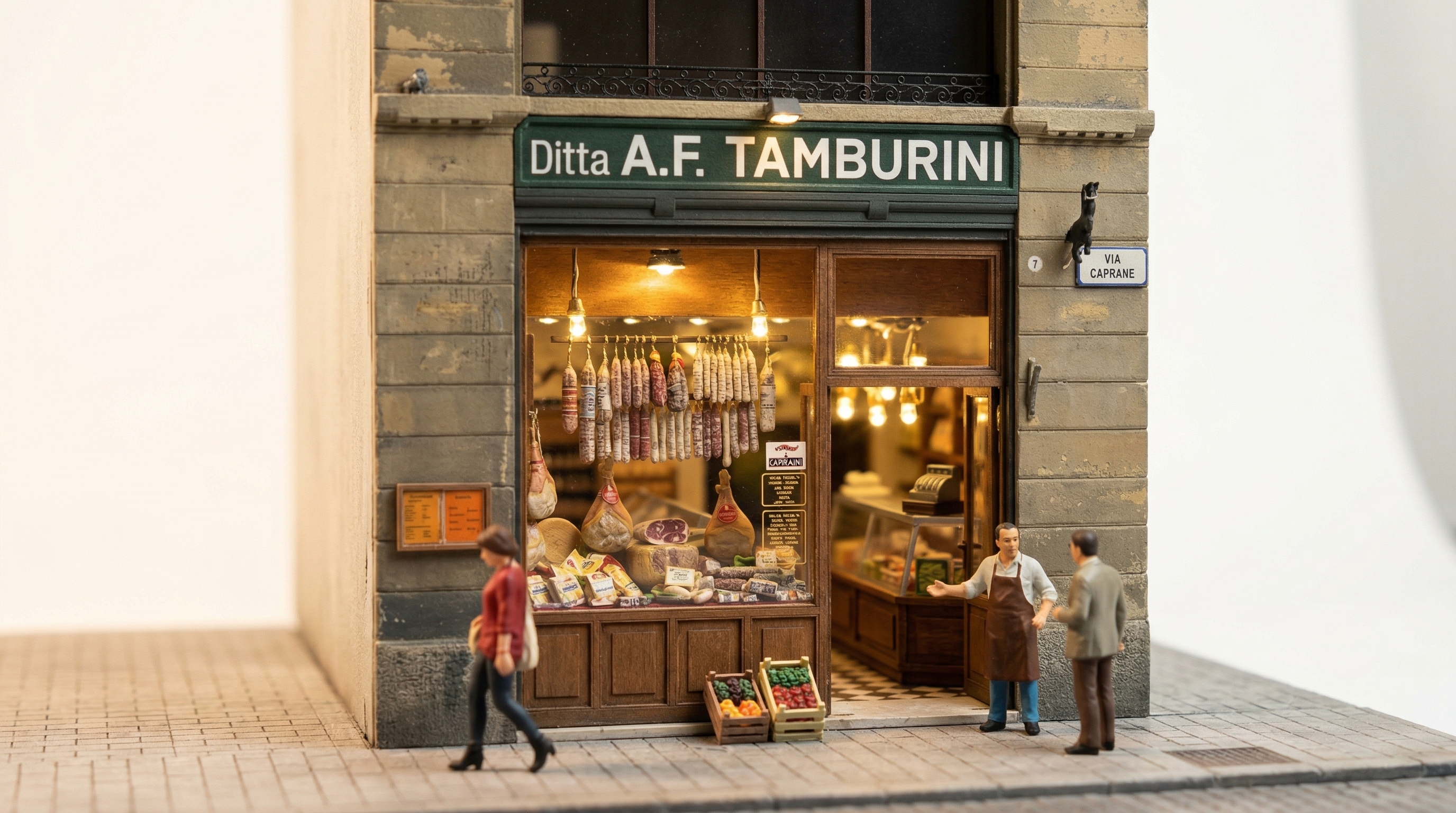
Tamburini
Bologna, Italy
Tamburini opened on Via Caprarie in 1932 and has anchored Bologna's Quadrilatero ever since. Mortadella hangs in the window, cotechino rests in the cold case, and the counter staff move with the efficiency of people who have sliced a lot of meat. The shop is also a tavola calda — warm dishes at lunch, eaten standing at narrow counters along the walls. No other salumeria in Bologna draws the same mix of locals, market vendors, and visitors who have done their homework.