Harbin Red Sausage
哈尔滨红肠 / Lidaosi (里道斯)
Heilongjiang, China
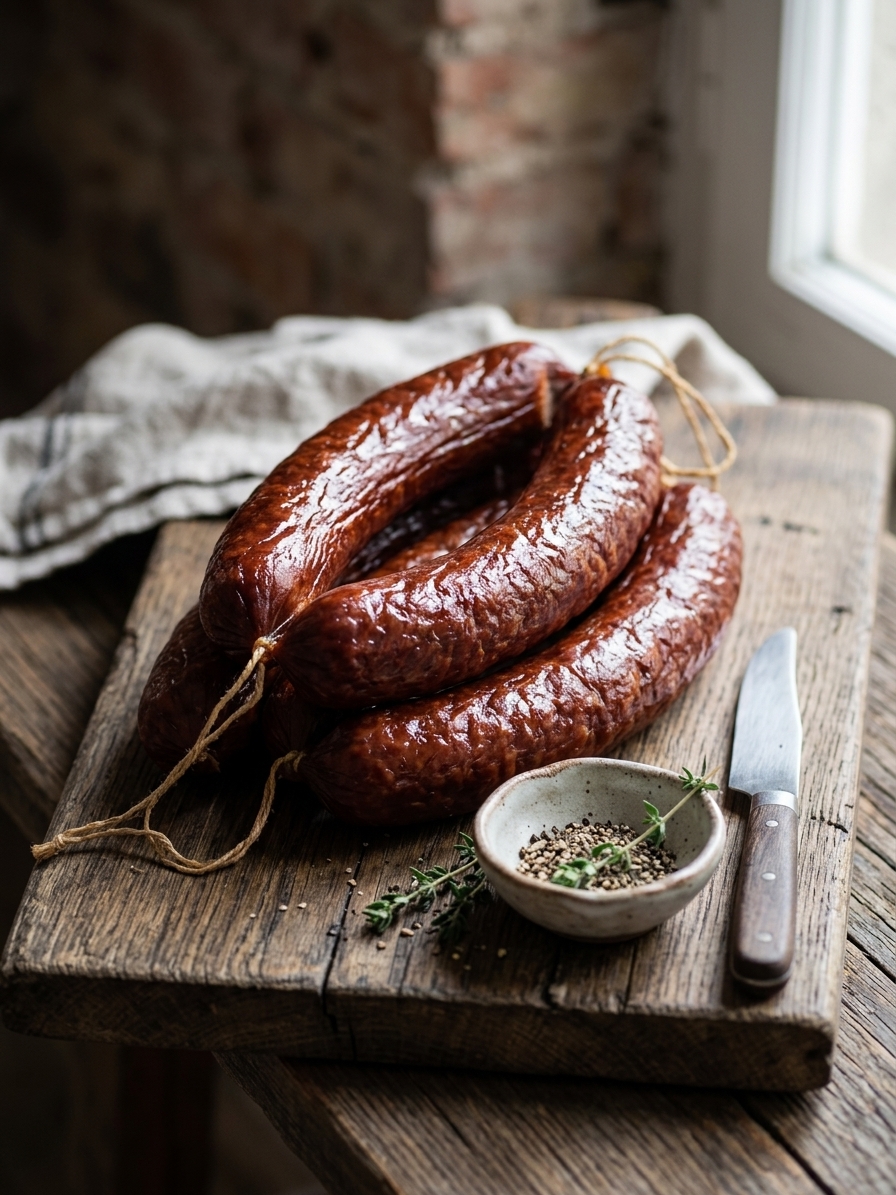
Harbin Red Sausage, known locally as hongchang or by its secondary name lidaosi, is a smoked pork sausage born from the collision of Lithuanian and Russian food traditions with Manchurian China. Harbin did not exist as a significant city before 1898. The Chinese Eastern Railway — a Russian-built line cutting across Manchuria — turned a river crossing into a boomtown, bringing Lithuanian and Polish workers who ran sausage factories alongside Russian merchants and engineers. In March 1909, Lithuanian staff inside the Churin company's Daoli District factory began producing what locals called hongchang. The name lidaosi is a transliteration of the Russian kolbasa litovskaya, meaning Lithuanian sausage. The sausage is made from coarsely ground pork with back fat, seasoned with garlic, black pepper, and mild spices, then cured with nitrite, stuffed into natural hog casings, cold-smoked over hardwood for several hours, and poached to a fully cooked state. The dark mahogany casing audibly snaps on the first bite. The interior is rose-red from the nitrite cure, with visible fat pockets in the lean matrix. It is eaten cold, sliced thin, with dalieba rye bread and butter.
History
Harbin was founded by the Russian Empire as a railway town in 1898. The Chinese Eastern Railway brought thousands of European workers, and by 1903 Harbin had a Russian quarter, Orthodox churches, and bakeries producing dalieba rye bread. The Churin company, founded by Siberian merchant Ivan Yakovlevich Churin, opened a Harbin sausage factory in the Daoli District staffed by Lithuanian workers who brought their curing and smoking traditions. Production of hongchang began in March 1909. The sausage spread from the Russian community into the local Manchurian population. After 1917, Russian emigres fleeing the revolution doubled the city's European population, reinforcing the food culture. The factory changed hands repeatedly: Japanese management in 1941, Soviet ownership briefly after 1947, then Chinese state control in 1953. During the Cultural Revolution the brand was renamed 'The East Is Red.' The original name was restored in 1984. The Qiulin Lidaosi company is today the principal heir to the original recipe. A second major producer, Harbin Meat Processing Company (哈肉联), founded in 1913 with Russian technical help, holds Heilongjiang Province intangible cultural heritage status. Both brands are sold from counters on Central Street in Daoli District, the preserved European-style pedestrian boulevard that remains the physical heart of hongchang culture.
Ingredients
Preparation
Lean meat and fat are separated and cured independently with salt and sodium nitrite at 8 to 13°C. Lean meat cures for 72 hours; fat for 24 to 48 hours. The nitrite turns the lean meat rose-red during curing. The cured lean goes through a 3mm grinder plate; back fat is diced into small cubes and kept cold. Ground meat, spices, and water are mixed until the paste is sticky and cohesive. Fat cubes fold in last. The mixture stuffs into 36mm natural hog casings, linked at 20cm, and hangs at room temperature for an hour to dry the surface. Smoking follows a temperature ramp: 35°C rising to 55°C then 75°C over approximately eight hours over dry hardwood. The sausages then poach at 84 to 92°C until the centre reaches 72°C, roughly 35 minutes. Cold water cooling stops the cooking and tightens the casing. The result is a fully cooked, ready-to-eat sausage.
Taste
Medium-salty with smoke and garlic in the foreground. Black pepper and earthy spice (cumin, cardamom, nutmeg) work below the surface without announcing themselves. The smokiness is drier and less sweet than Central European equivalents. No five-spice, no sugar, no soy — nothing marks it as a Chinese sausage in the lap cheong tradition. It reads as Eastern European until you see where it is sold.
Texture
The dark mahogany casing gives an audible snap on the first bite. The interior is rose-red from nitrite curing, dense and chewy without being tough, with visible fat pockets distributed through the lean matrix. A well-made hongchang leaves no greasy residue on the knife. When sliced cold, the rounds hold their shape and do not crumble.
Rituals & Traditions
Central Street snack walk
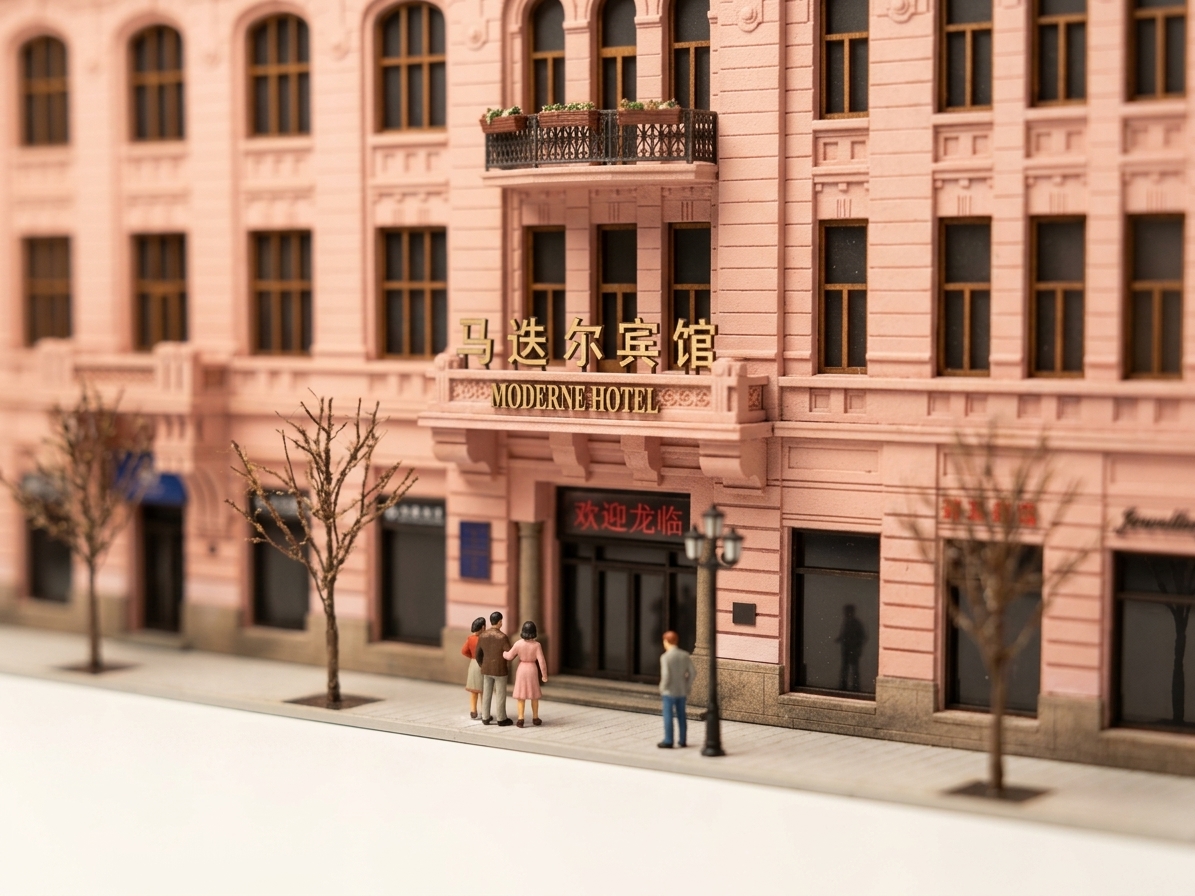
Zhongyang Dajie (Central Street) in Daoli District is a pedestrian boulevard lined with preserved early-20th-century European buildings. Vendors sell whole hongchang links to eat walking. Tourists bite directly from the link; locals buy from counters at Qiulin or Harbin Meat Processing to take home. The street concentrates both the architecture and the food of Harbin's Russian-era history in one walkable stretch.
Let it warm before slicing
Take the sausage out of the refrigerator 20 minutes before serving. Cold dulls the garlic and smoke. At room temperature the fat softens slightly and the flavor opens.
Don't confuse it with lap cheong
Hongchang shares a casing format with Cantonese lap cheong and nothing else. Lap cheong is sweet, red from soy and rice wine, and eaten hot as a cooking ingredient. Hongchang is savory, smoked, garlicky, and eaten cold. The two sausages have no shared origin or technique.
Recipes
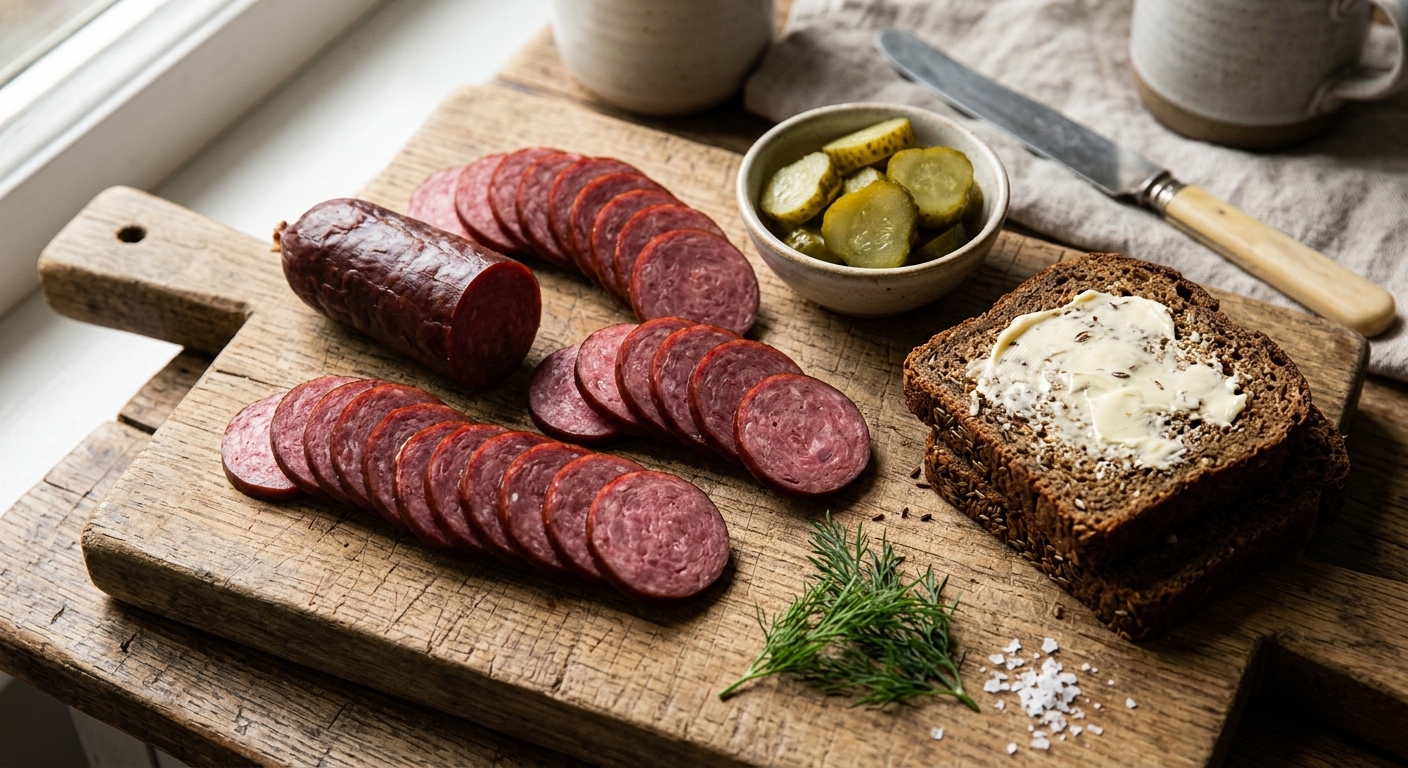
Cold Hongchang Platter
Harbin Red Sausage
The canonical Harbin way to eat hongchang: sliced cold at room temperature, laid out on a board with thick-cut dalieba rye bread, butter, and pickled cucumbers. No cooking required.
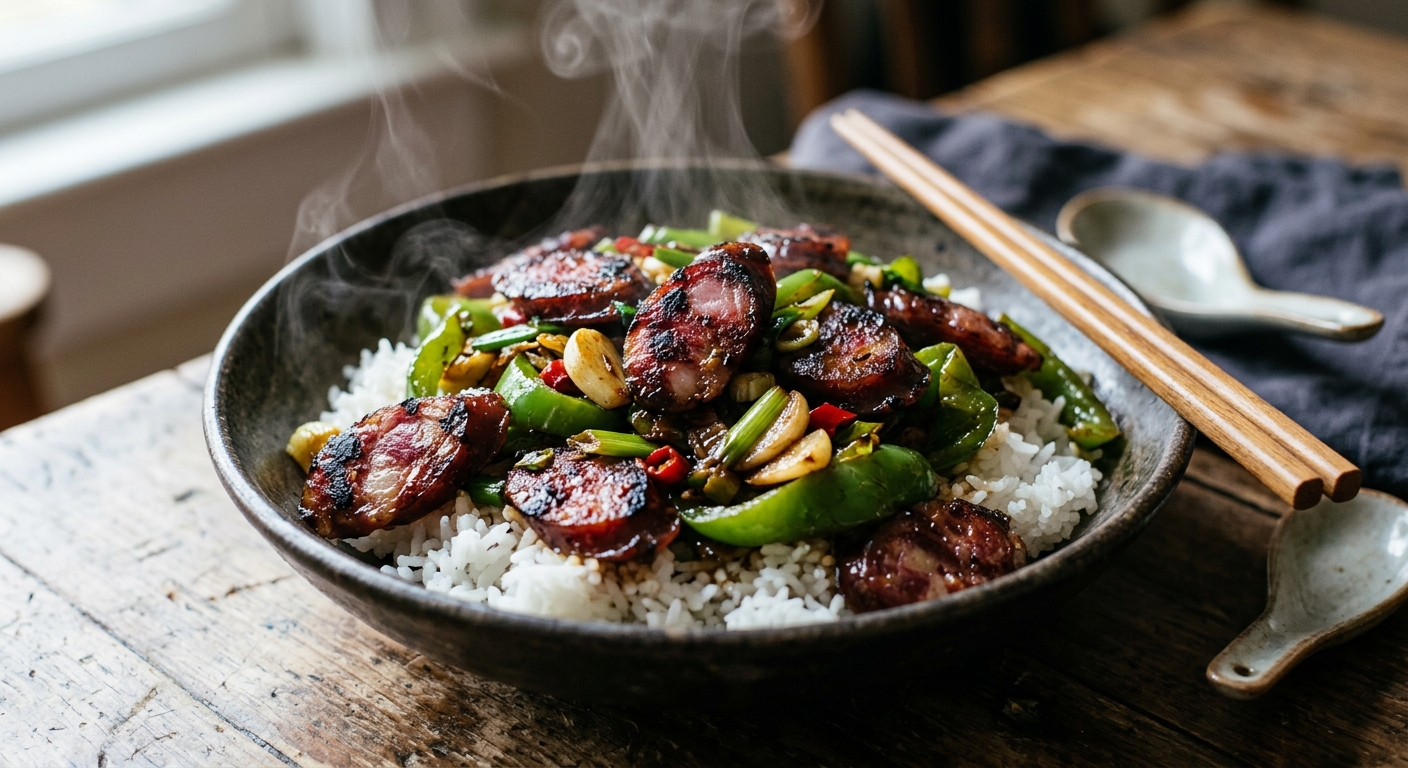
Hongchang and Green Pepper Stir-fry
Harbin Red Sausage
The most common cooked use of hongchang in Harbin home kitchens: sliced thin and stir-fried with green pepper and garlic. The sausage's smokiness handles most of the seasoning. Ready in five minutes.