Coppa di Testa
Emilia-Romagna, Italy
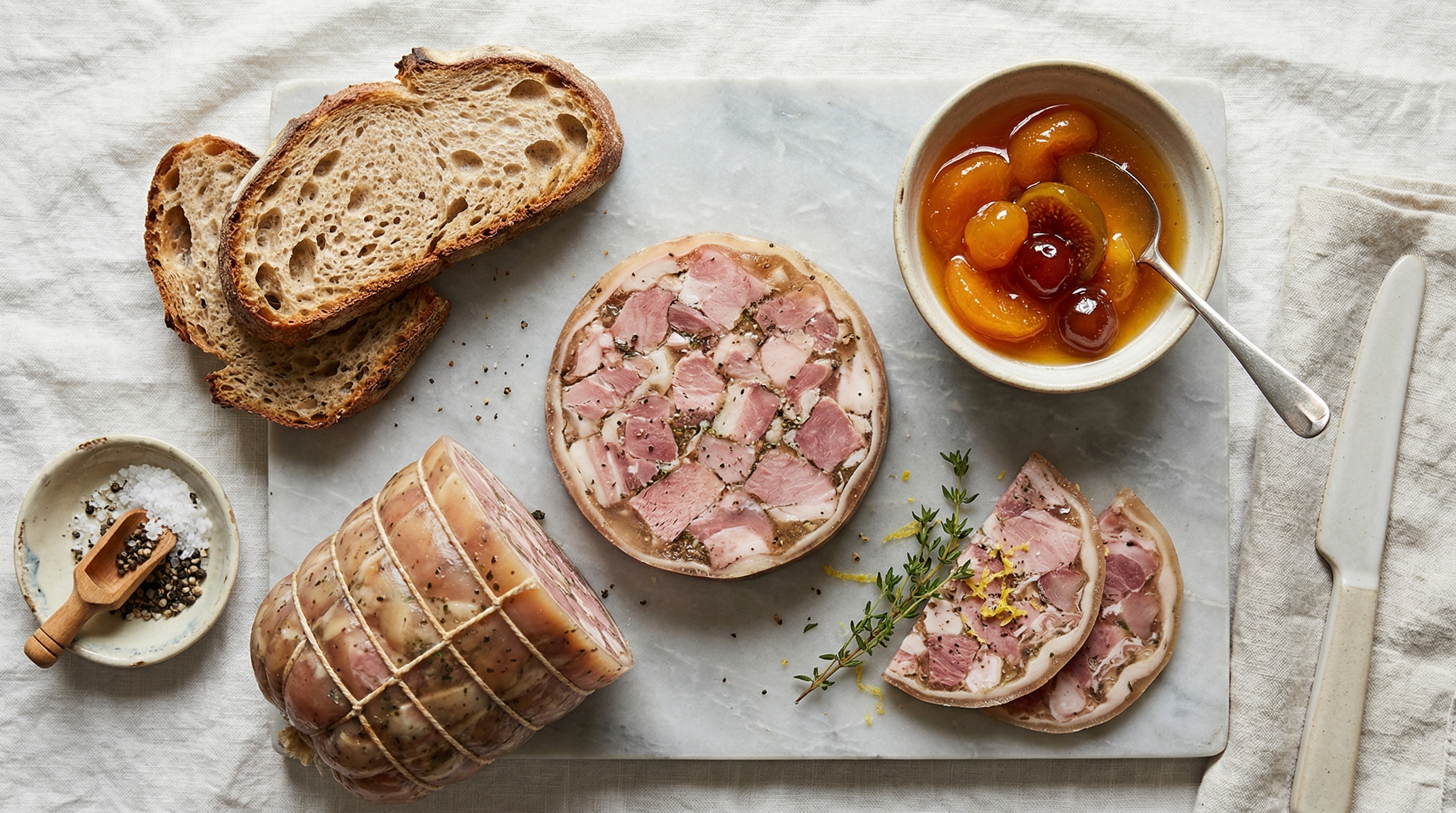
Italian head cheese made from the meat, skin, and cartilage of a pig's head, cooked in broth, pressed into a mold, and sliced cold. Each region has its own seasoning, ranging from lemon and parsley in the north to chili and fennel seed in the south. The result is a cold cut with a mosaic of textures visible in each slice.
History
Head cheese is one of the oldest forms of charcuterie, using the parts of the animal that do not lend themselves to other products. In Italy, coppa di testa has been made since the medieval period, with the basic technique remaining unchanged: cook, season, press, and cool. The name 'coppa' (cup or head) reflects the rounded shape of the pig's head. Regional variations are numerous; in Emilia-Romagna, the version tends toward a cleaner, less rustic seasoning than the southern styles.
Ingredients
Preparation
The pig's head simmers in salted water with aromatics for several hours until the meat falls from the bone. The meat and skin are stripped, chopped, seasoned with salt, pepper, lemon, and herbs, then packed tightly into a cylindrical mold or cloth. Once cooled, the natural gelatin sets the mixture firm enough to slice.
Taste
Mild, clean pork with herbal brightness from parsley and a citrus lift from the lemon. Less fatty-tasting than it sounds; the long cooking makes the flavors lean and distinct.
Texture
Each slice shows a mosaic: soft meat pieces, translucent gelatin, and chewy skin. The gelatin provides structure; without it, the slice would not hold together.
Rituals & Traditions
Nose-to-tail thrift
Coppa di testa originated as a way to use every part of the pig. In Emilia-Romagna, the slaughter day tradition of making it from the head is still observed in farmhouses and small butcheries.
On the Map
Where to Buy
+ Know a producer? Suggest oneWhere to Eat
Mercato di Mezzo
Bologna, Italy
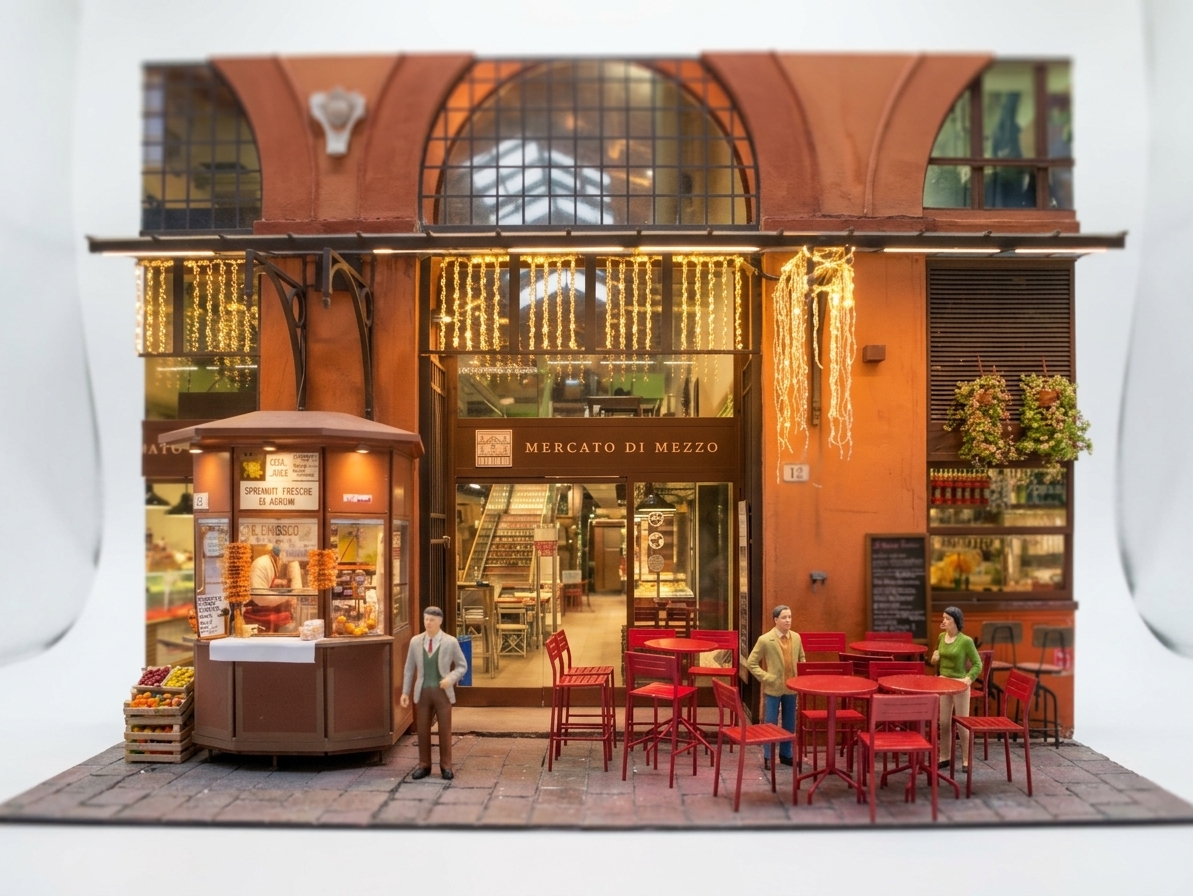
Mercato di Mezzo sits at the centre of the Quadrilatero, the medieval market grid that still functions as Bologna's food heart. The covered hall brings together vendors selling mortadella by the slice, cotechino in winter, fresh pasta, and local cheeses. A mezzanine bar overlooks the ground floor stalls. The mercato runs from morning until late evening, and the crowd shifts from market shoppers to aperitivo drinkers as the day goes on.
Salumeria Bruno e Franco
Bologna, Italy
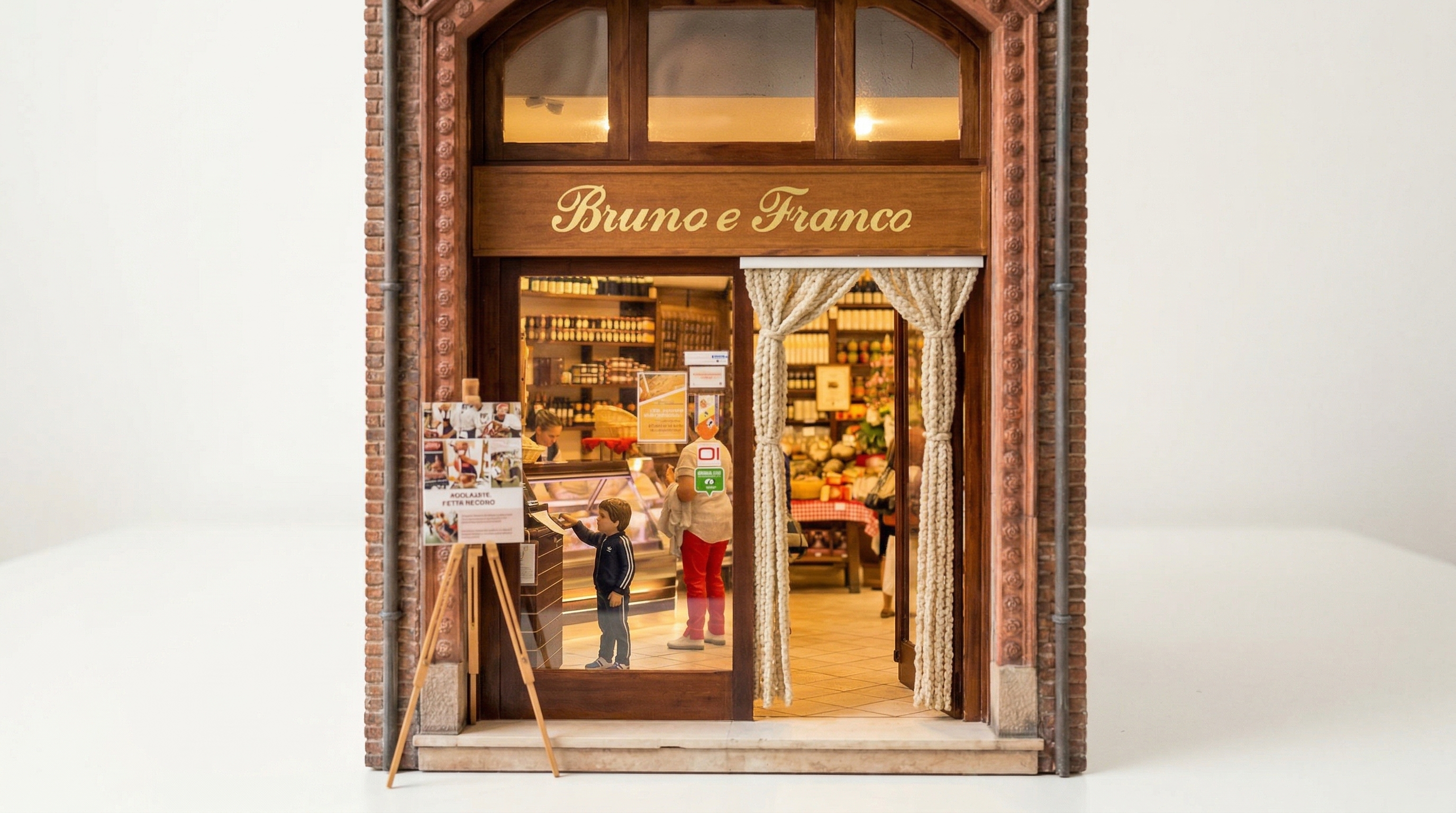
Bruno e Franco sits on Via Oberdan, away from the tourist circuit of the Quadrilatero. The neighbourhood deli format means no performance — just counter service, reasonable prices, and mortadella that gets sliced to order. The kind of place where regulars drop in on a Tuesday with a specific request and leave satisfied three minutes later. The coppa di testa is made by a local producer and changes with the season.
Salumeria Simoni
Bologna, Italy
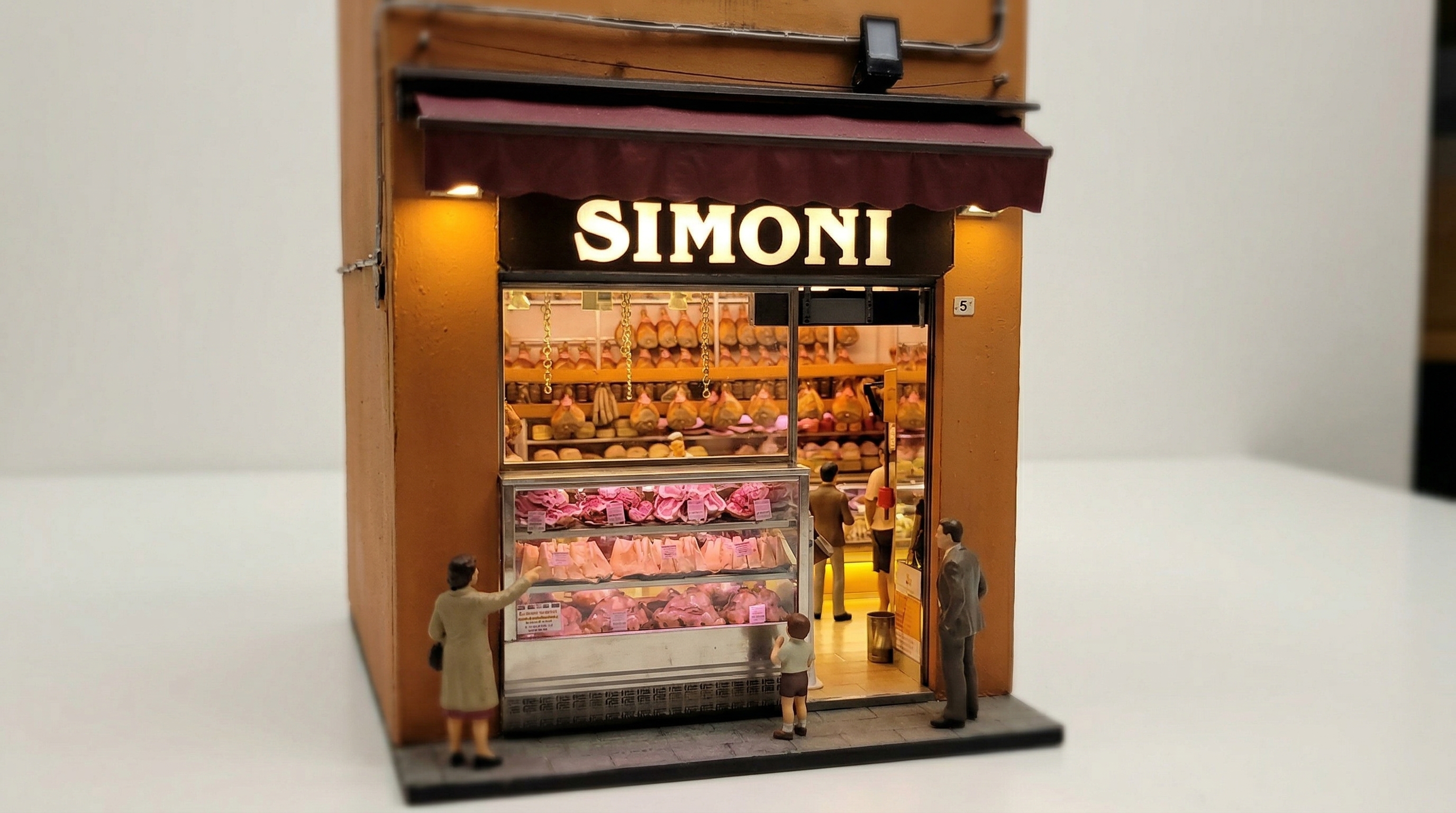
Salumeria Simoni has occupied its corner of Via Drapperie since 1951. Cured meats hang from the ceiling in dense rows, and the smell reaches you before the shop does. This is the Quadrilatero at its most photogenic — but the locals who come here aren't after atmosphere. They want mortadella sliced thin, a piece of good salame, and a quick conversation with whoever is behind the counter. The shop stocks regional producers from across Emilia-Romagna.
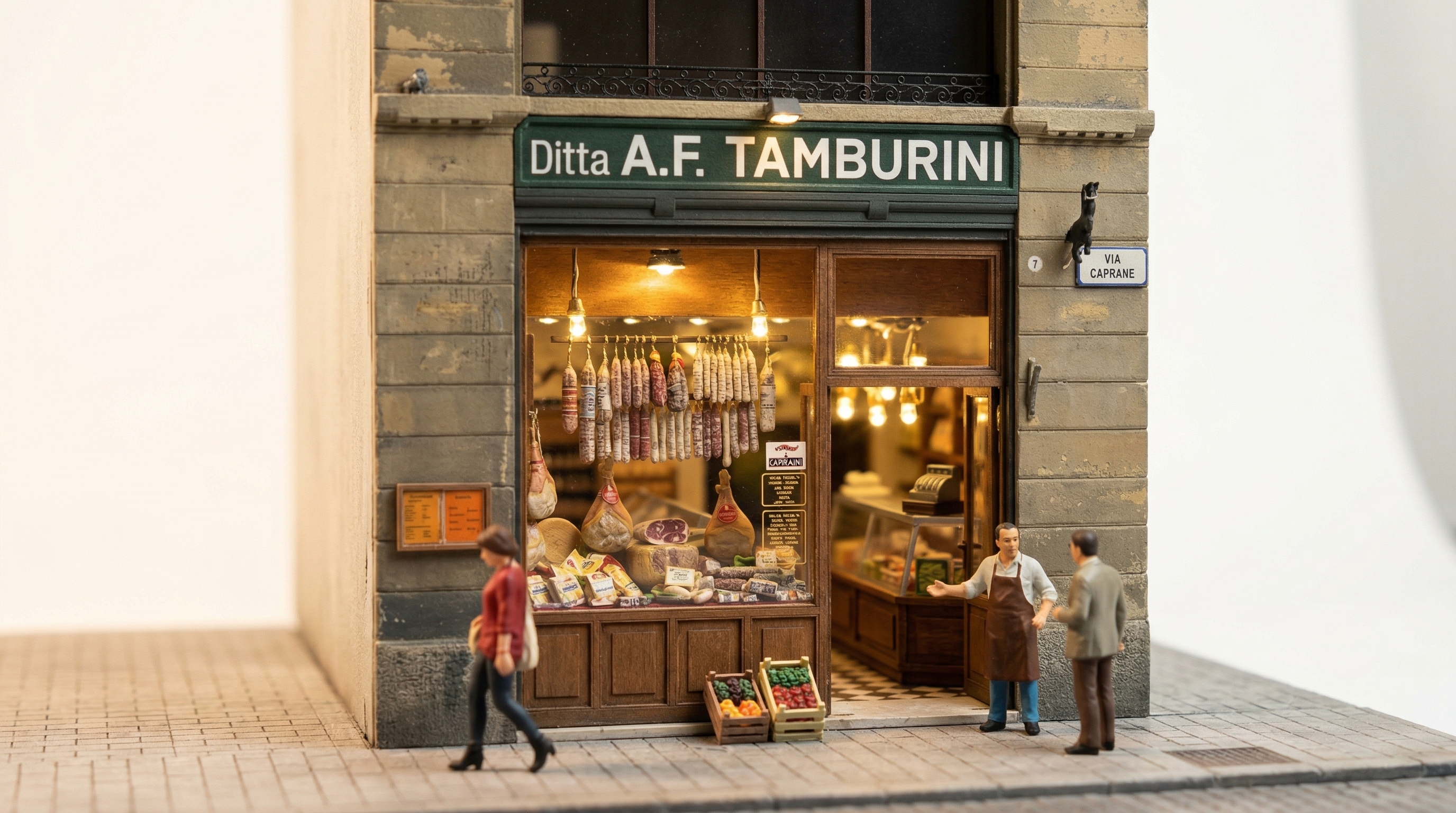
Tamburini
Bologna, Italy
Tamburini opened on Via Caprarie in 1932 and has anchored Bologna's Quadrilatero ever since. Mortadella hangs in the window, cotechino rests in the cold case, and the counter staff move with the efficiency of people who have sliced a lot of meat. The shop is also a tavola calda — warm dishes at lunch, eaten standing at narrow counters along the walls. No other salumeria in Bologna draws the same mix of locals, market vendors, and visitors who have done their homework.