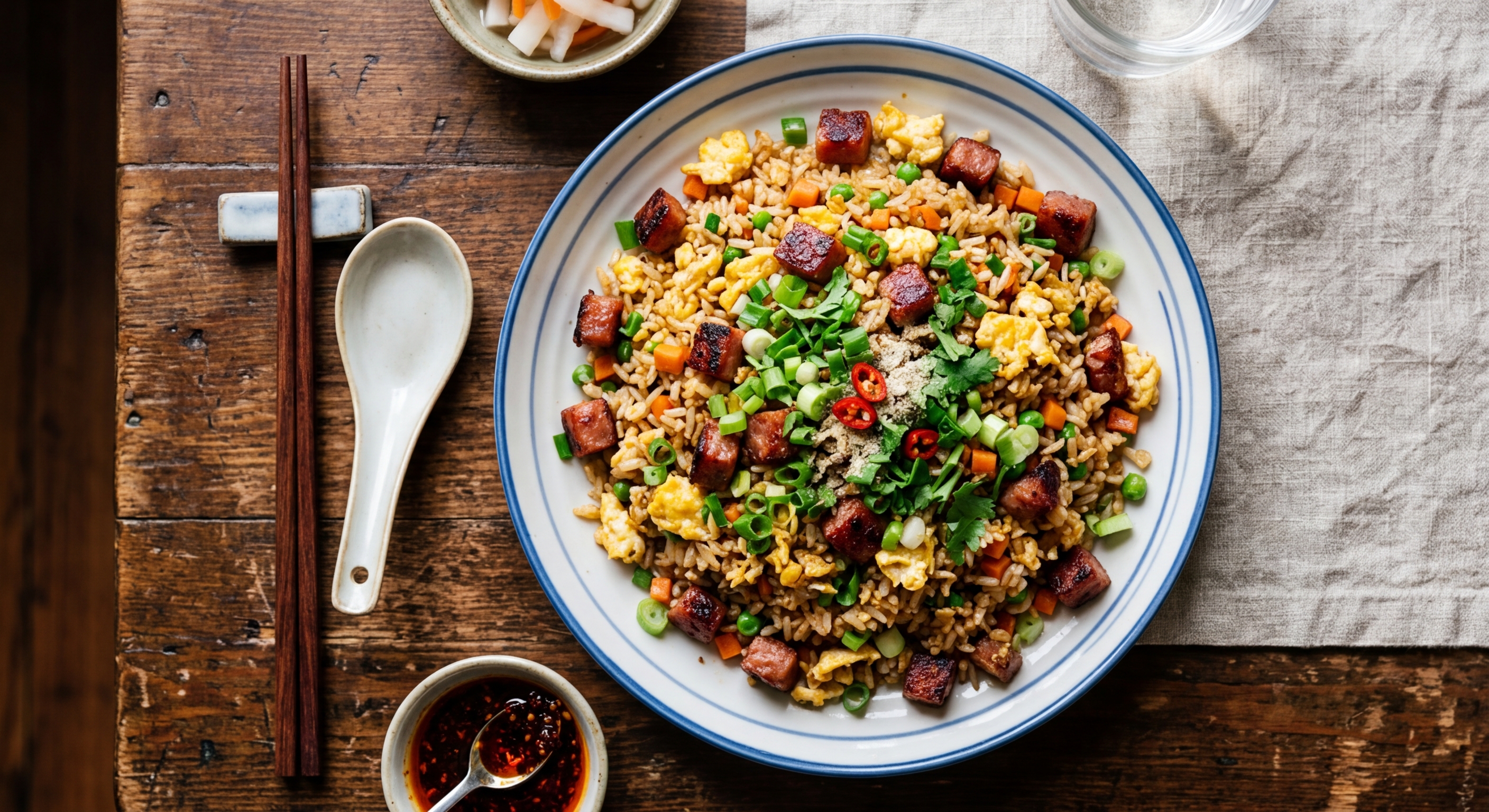
Taiwanese Sausage Fried Rice
Recipes with Taiwanese Sausage
A fast weekday dish built from diced sweet pork sausage, day-old jasmine rice, egg, and scallions. The sausage goes in first, its fat rendering into the wok and coating every grain of rice. The sweetness in the meat caramelises at the wok's high heat and adds a faint char to the rice. This is home cooking, not night market food — it uses the sausage as a flavouring ingredient rather than the centrepiece.
Prep Time
10 min
Cook Time
10 min
Servings
2
Difficulty
Easy
Ingredients
- 2 Taiwanese sweet pork sausages (xiangchang), diced into 1cm cubes
- 2 cups cooked jasmine rice, day-old and cold
- 2 eggs, beaten
- 3 scallions, white and green parts separated, sliced thin
- 2 cloves garlic, minced
- 1 tbsp soy sauce
- 1 tsp sesame oil
- White pepper to taste
- 1 tbsp neutral oil
Steps
Heat a wok or large skillet over high until it smokes. Add the neutral oil and swirl to coat.
Add the diced sausage. Spread into a single layer and cook without stirring for 90 seconds to get some browning on the cut faces. The sugar in the sausage will start to caramelise and may stick slightly — this is fine. Stir and cook 1 more minute.
Add the white scallion parts and garlic. Stir-fry for 30 seconds until fragrant.
Push everything to one side of the wok. Pour the beaten eggs into the empty side and scramble loosely until just set, then break into pieces and toss with the sausage.
Add the cold rice. Break up any clumps with a spatula and toss everything together over high heat for 2–3 minutes. The rice should be hot through and beginning to take on a slight char in places.
Season with soy sauce and white pepper. Toss once more. Remove from heat and finish with sesame oil and the green scallion parts.
Tips
Day-old rice is essential. Freshly cooked rice is too moist and will steam in the wok instead of frying; the grains clump and the texture turns gluey. If only fresh rice is available, spread it on a tray and refrigerate for at least 2 hours before using. The sausage releases enough fat on its own in most cases — taste before adding more oil.